A new museum village by the South China Sea brings exhibitions, research and cultural life together on a public platform above mangroves.
A Floating Cultural Village on Hainan’s East Coast
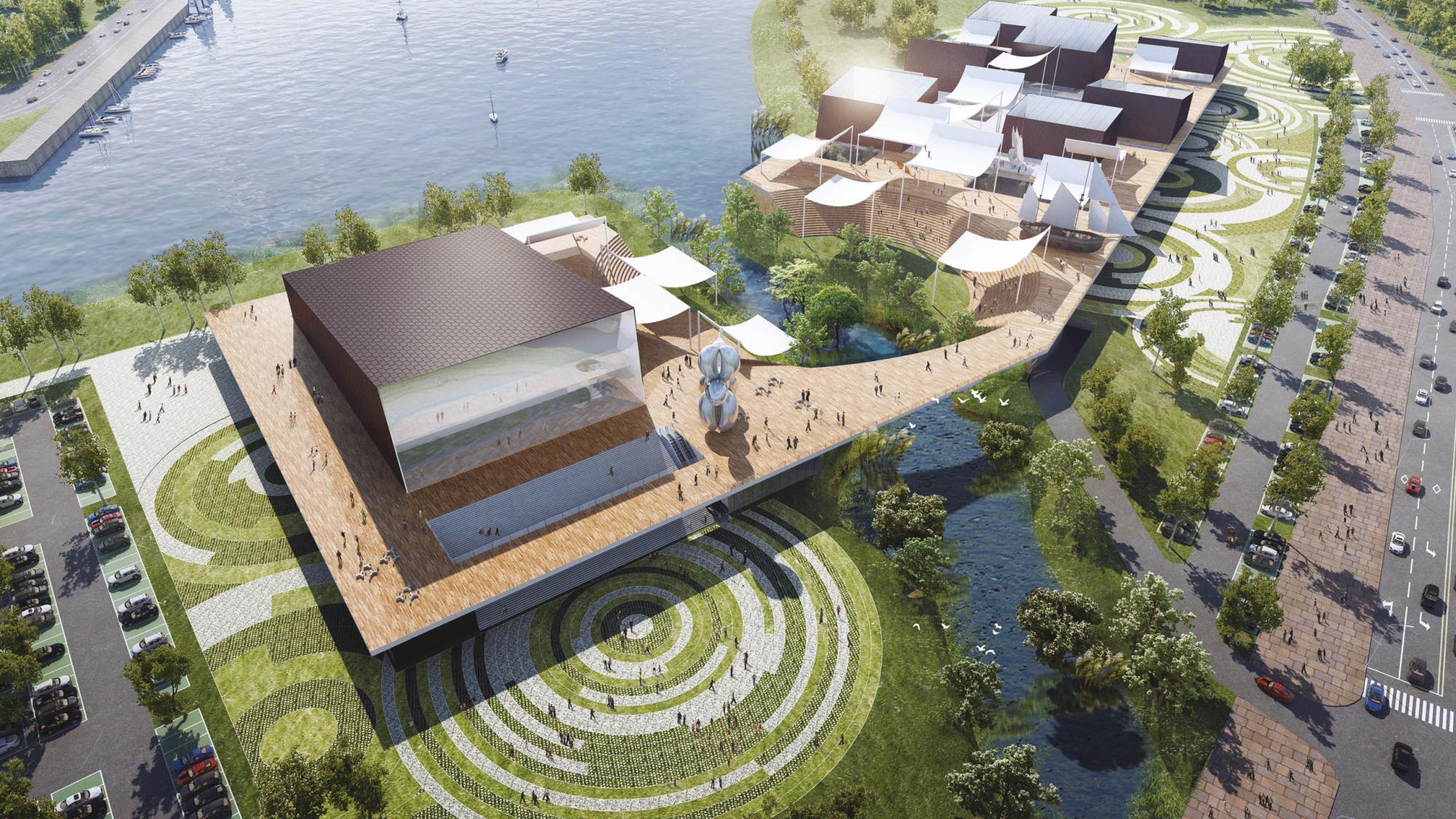
CLOU architects’ proposal for the Hainan Nanhai Museum introduces a new cultural landmark on the south edge of a coastal inlet near Tanmen Port. Located 20 kilometres north of Boao and 100 kilometres south of Haikou, the 70,000 square-metre complex includes an ethnographic museum, education and research facilities, and a 1,000-seat auditorium. The project seeks to anchor cultural tourism in the region through a modest, open and flexible design that draws from local landscape, materials and community traditions.
Context and Strategy
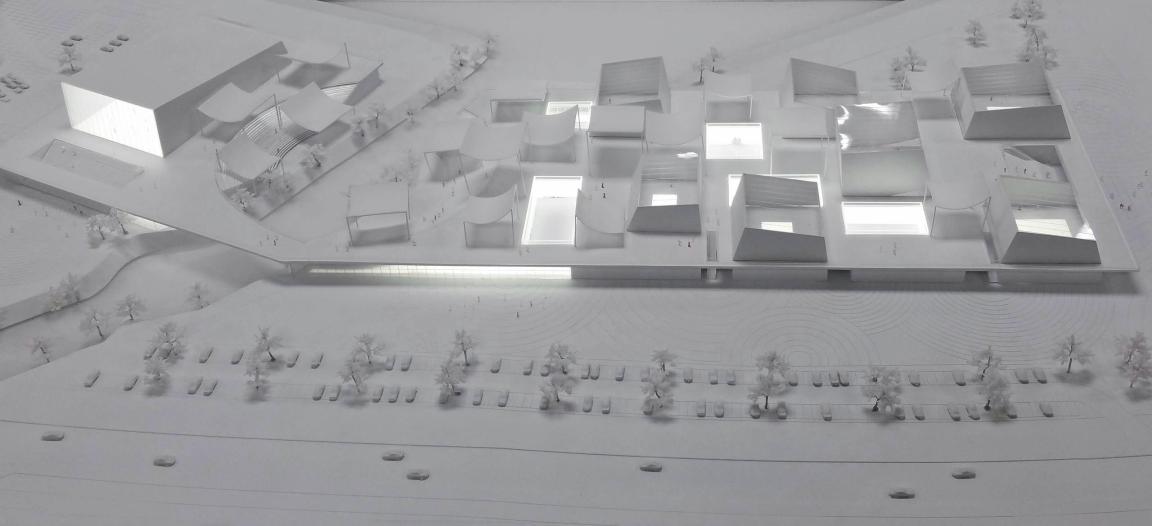
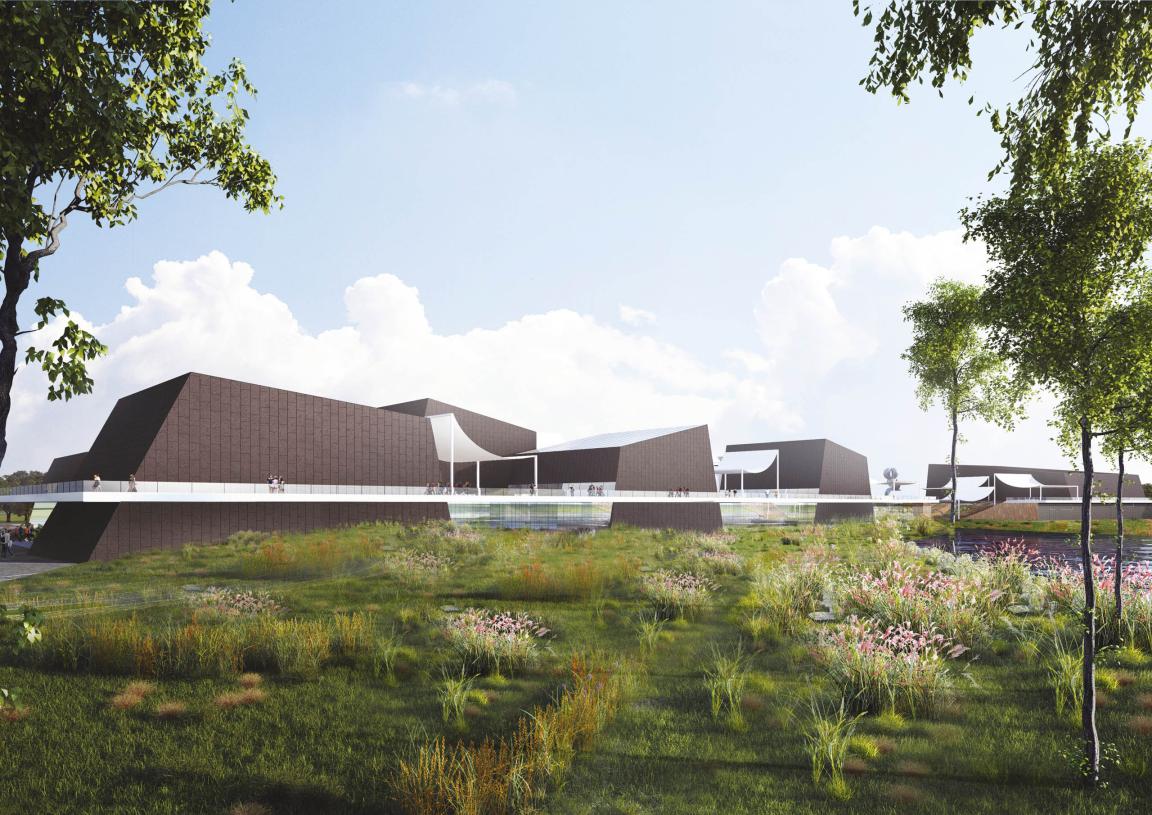
The Hainan Nanhai Museum is part of a regional initiative to strengthen cultural tourism on the island’s east coast. Occupying a waterfront site framed by a mangrove river and a fishermen’s dock, the proposal avoids creating a singular object. Instead, CLOU architects design a network of exhibition halls unified by a raised public platform. The platform is conceived as a shared civic space that connects buildings, visitors and nature.
A Platform for Cultural Exchange
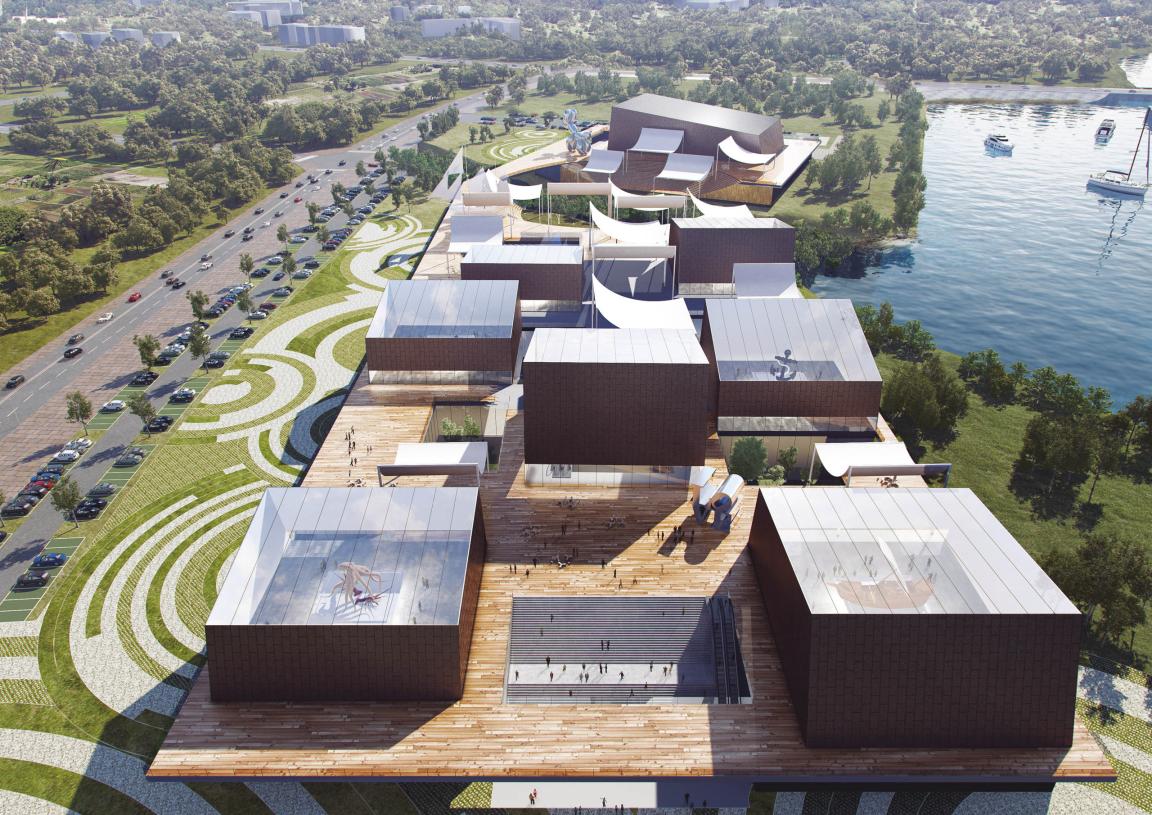
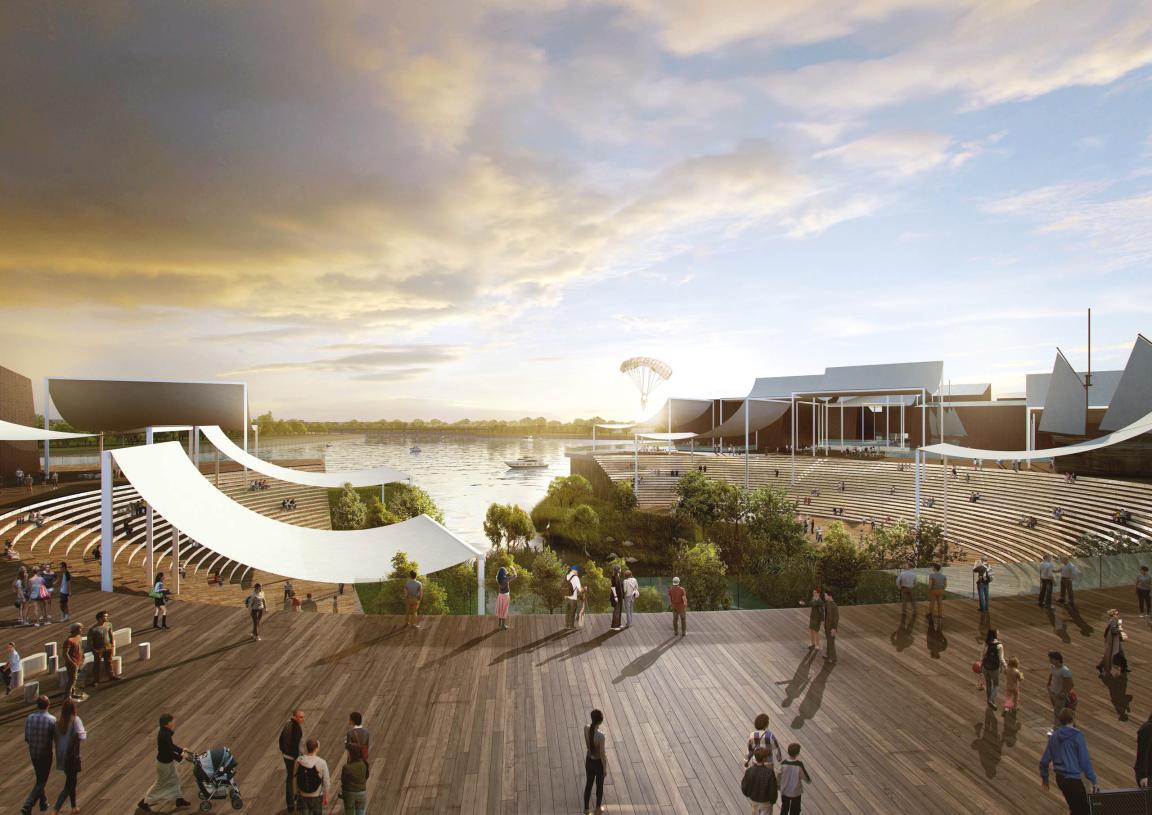
The 8-metre-high platform forms the centre of the visitor experience. It links seven distinct volumes, including the ticket hall, cafes, shops, and flexible exhibition halls. A circular outdoor amphitheatre for 500 people anchors both sides of the river and creates a setting for informal performances and water-based events. Visitors can explore the 27,000 square-metre exhibition space in a non-linear route, allowing temporary and permanent collections to coexist and adapt over time.
References to Local Heritage
The museum’s design draws from the traditions of Hainan’s floating fishing villages, where boats are connected to form extended social communities. The halls are inspired by local volcanic rocks with reddish hues, and the shading canopies reference drying fishing nets suspended above masts. Visual connections to the landscape are maintained through sunken courtyards and framed openings.
Flexible and Adaptive Functionality
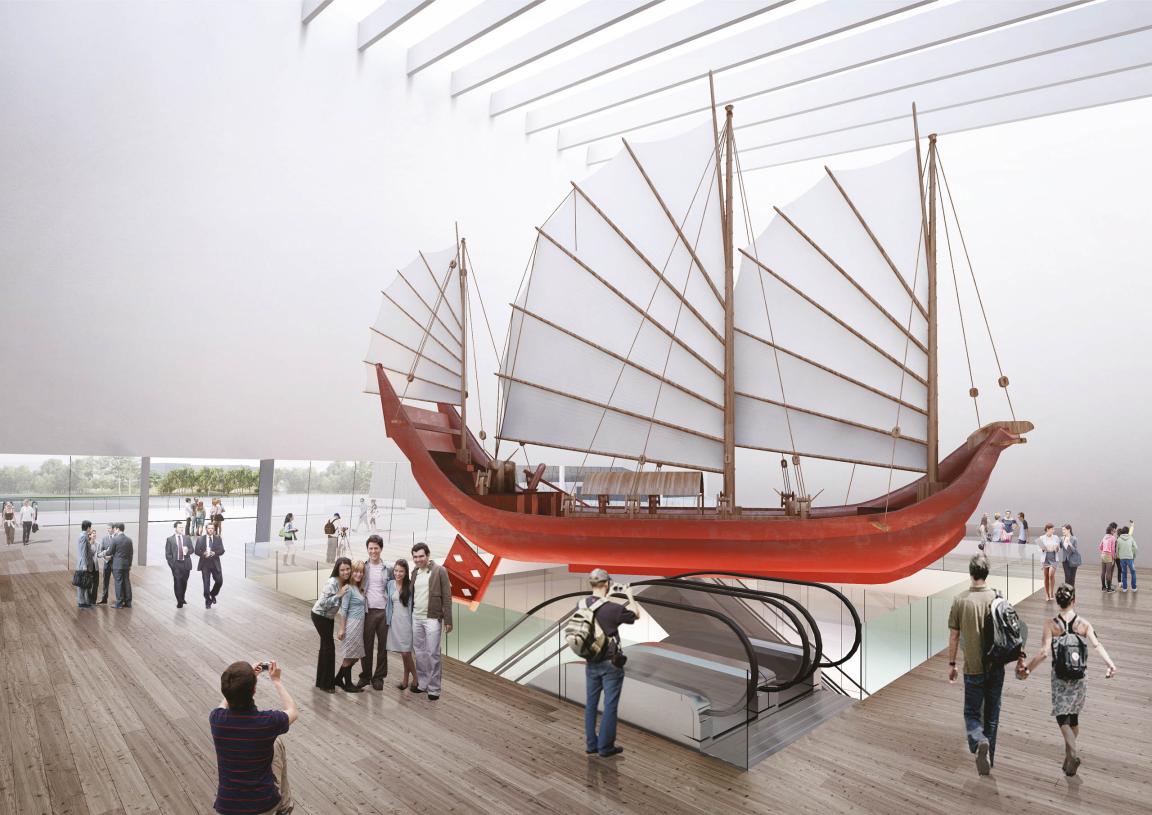
Each of the six exhibition buildings can function independently or as part of an interconnected route. This modular system supports diverse curatorial approaches and event programming. Below the platform, facilities for relic preservation, research and communication are located in a separate zone accessed through a dedicated lobby.
Site Integration and Circulation
The auditorium, located on the opposite side of the mangrove river, completes the spatial composition with a full-circle amphi-theatre facing the museum platform. Visitors cross a bridge at the upper level to access the performance space, ensuring clear flows between public, exhibition, and institutional functions.