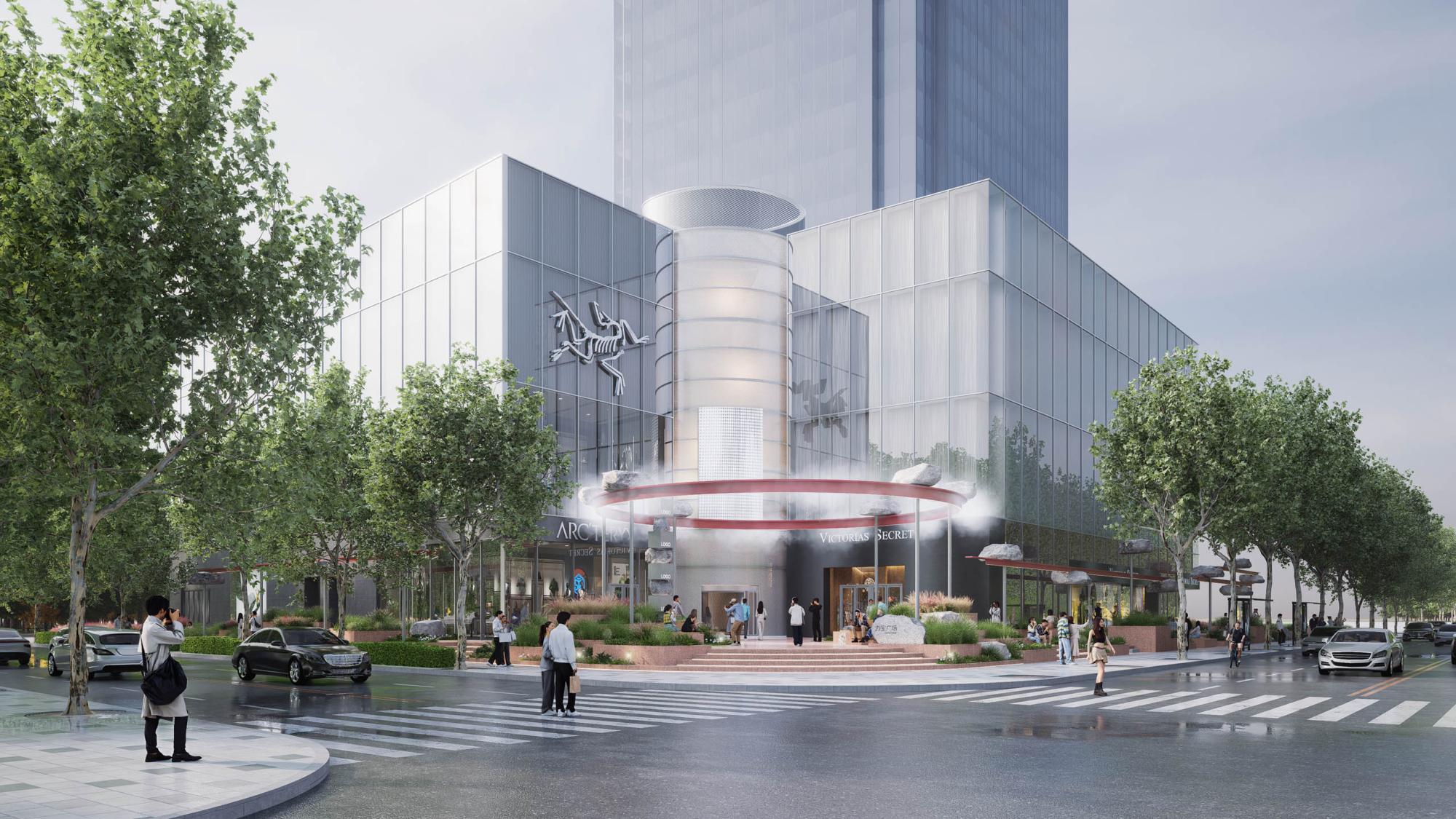
A vibrant concept proposal reimagines Lippo Plaza as a green urban oasis, blending nature, culture, and commerce in the heart of Huaihai Road.
Reimagining an Urban Landmark
Located on Central Huaihai Road, Lippo Plaza was the focus of a landscape design competition aiming to enhance its role as a cultural and commercial destination. CLOU architects’ concept proposal redefined the site’s public realm through a series of interconnected spaces designed to attract visitors, support social interaction, and create a seamless connection with the surrounding retail and urban fabric.
A Landmark Location Reconsidered
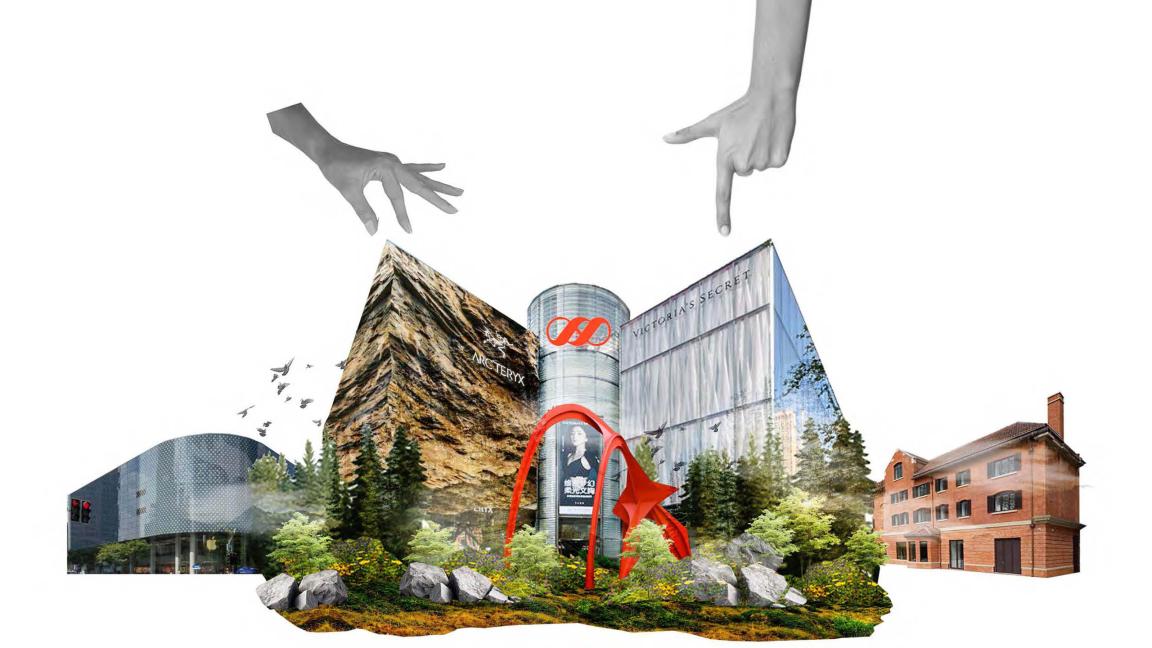
Lippo Plaza is positioned in one of Shanghai’s most prominent commercial districts, surrounded by super-A and A-grade office towers and a dense, high-energy urban context. Despite its prime location, the site’s existing landscape lacked engagement with the street and offered limited spaces for social interaction or visual identity. As part of the design competition, CLOU architects developed a concept proposal addressing these challenges and envisioning new opportunities for urban life.
Entrance Plaza: A New Urban Stage
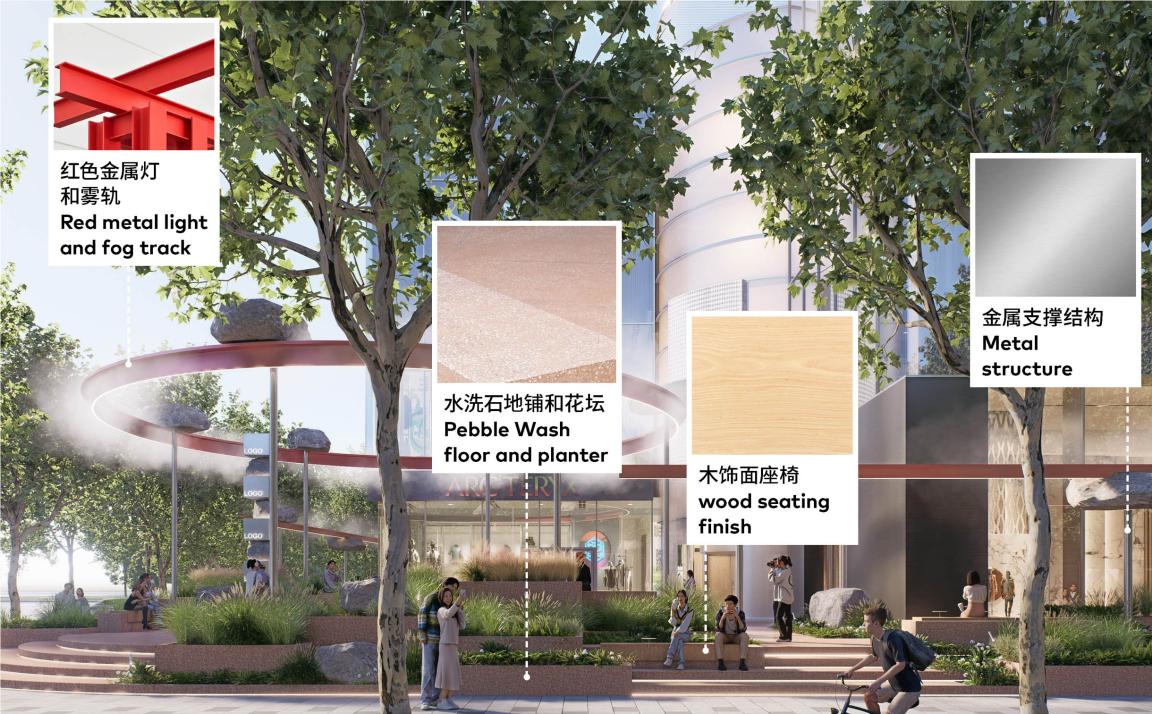
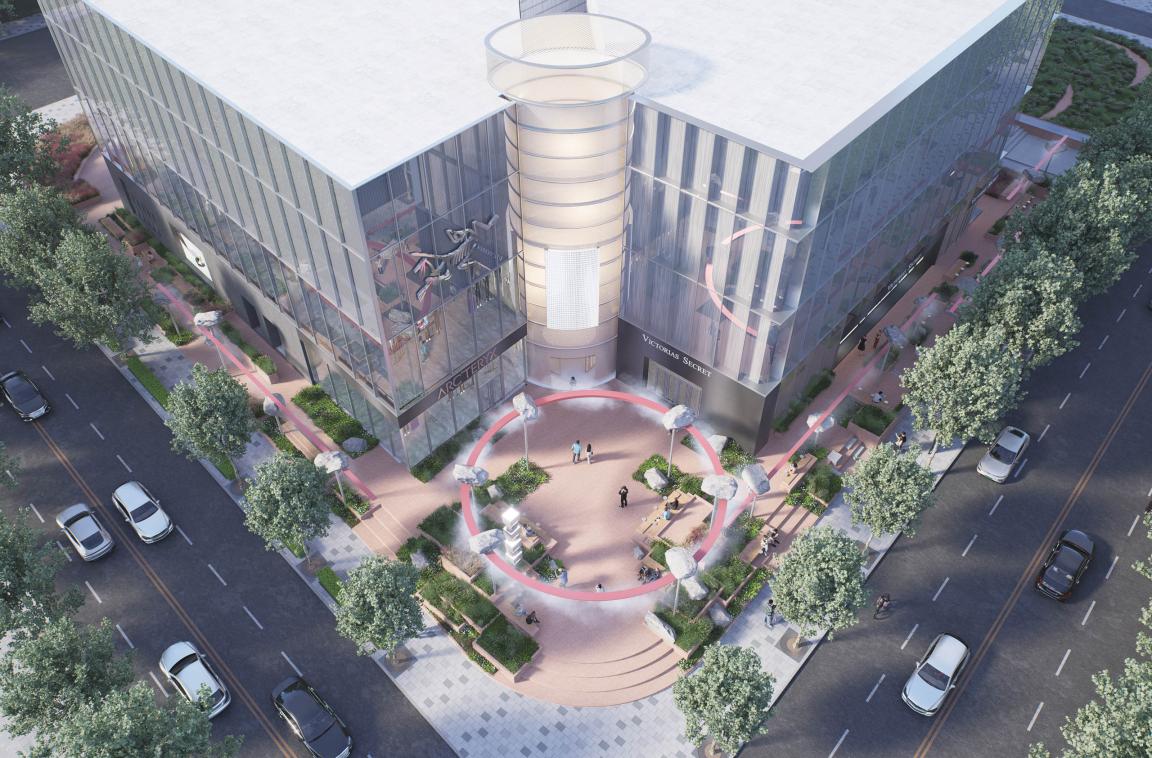
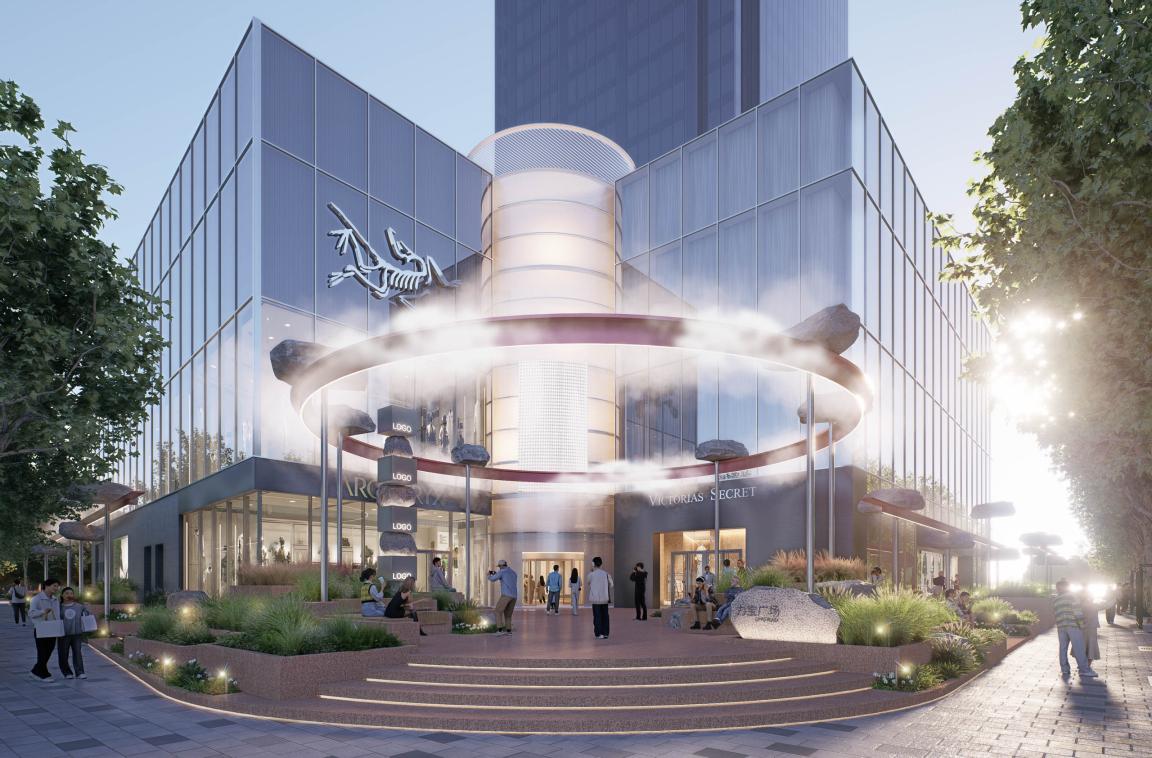
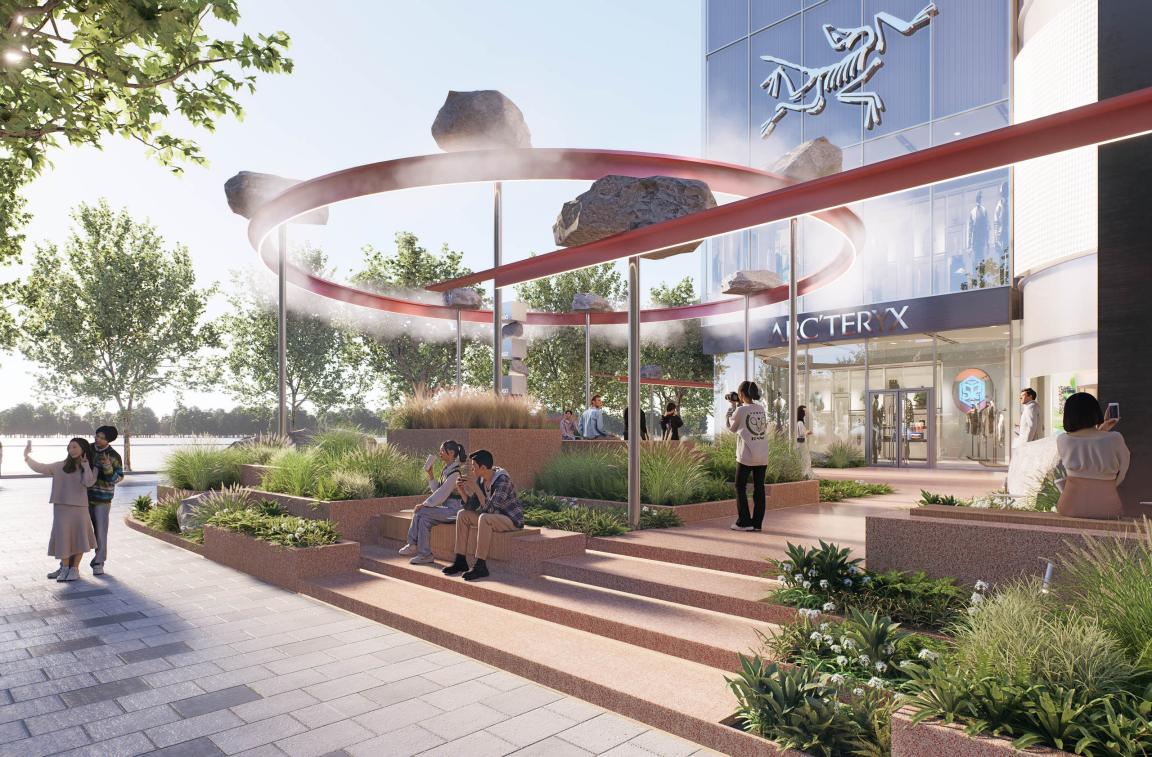
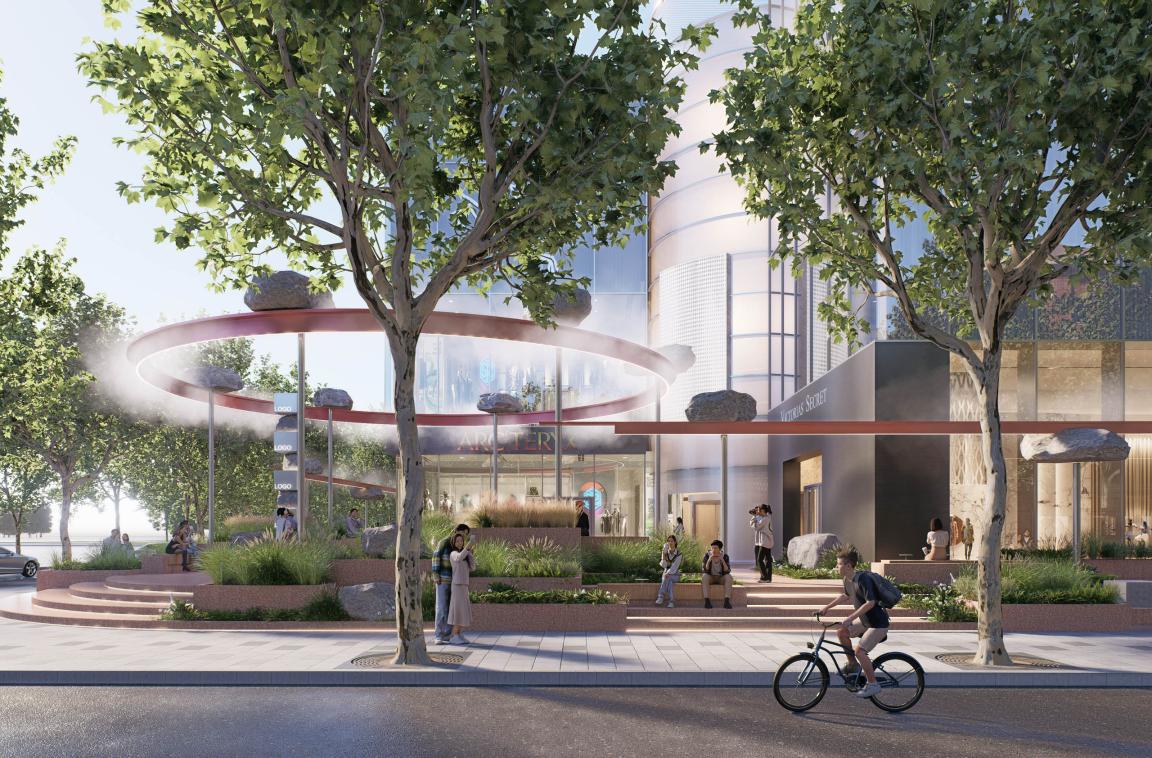
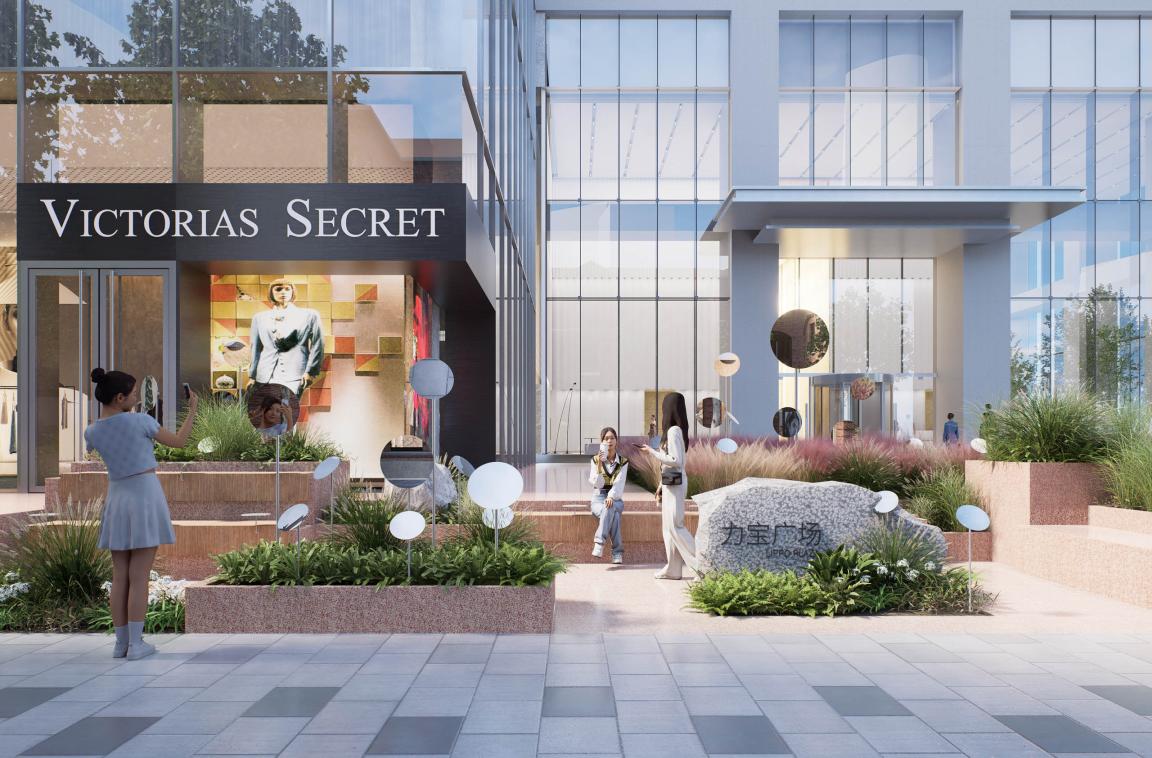
At the south entry, the proposal introduced a vibrant highlight element, a circular mist garden with red metal lighting and fog tracks, designed to draw visitors in and establish a strong visual identity. This plaza was envisioned as a social catalyst, guiding pedestrian flow into the mall while offering a lively space for gathering and discovery.
Linear Garden along Huaihai Road
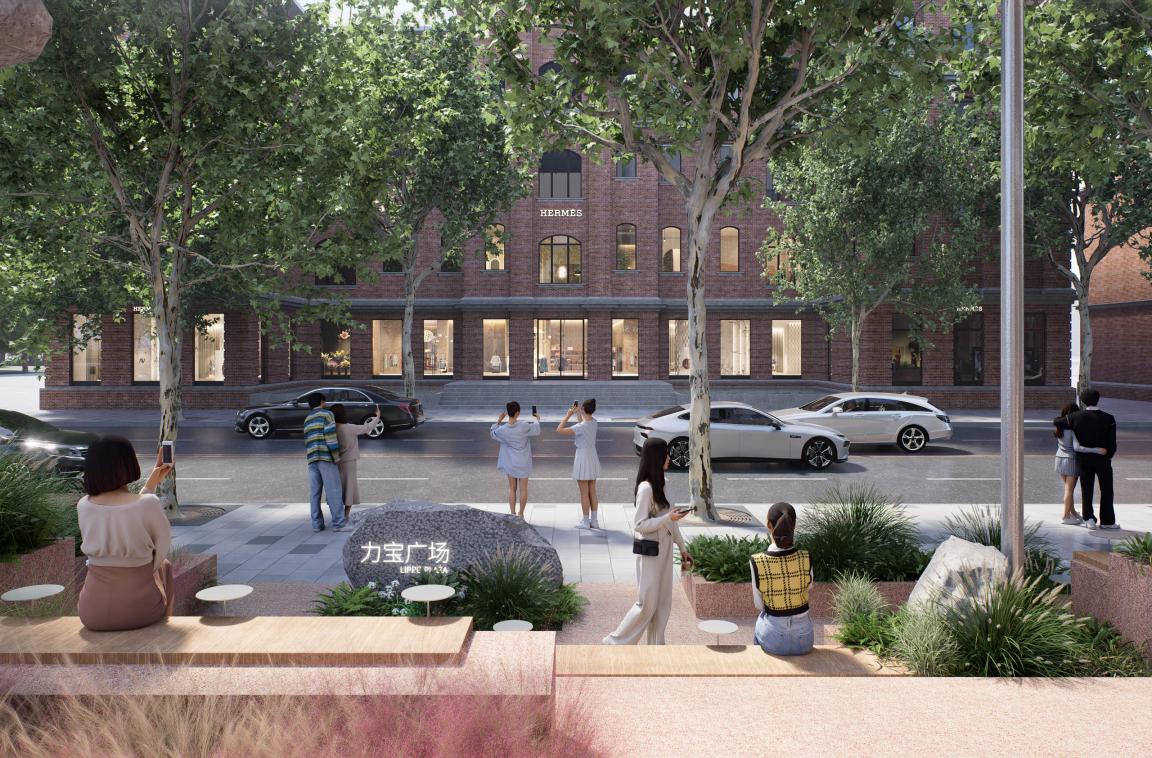
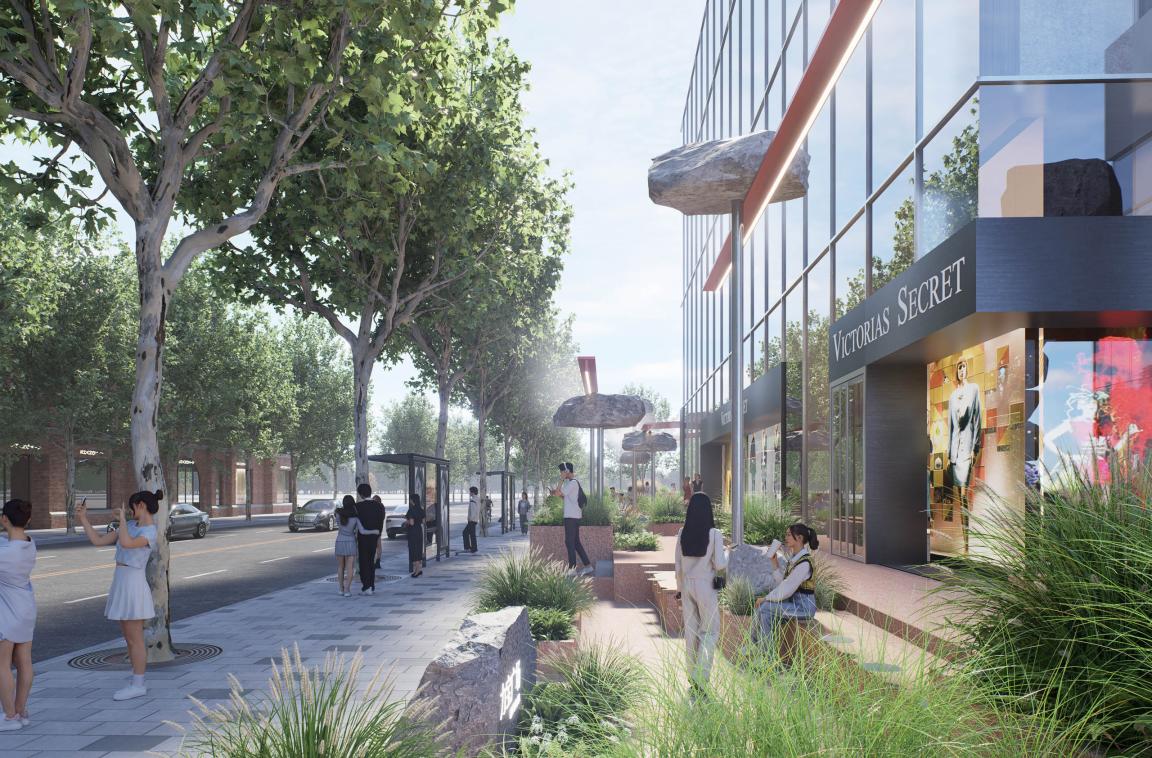
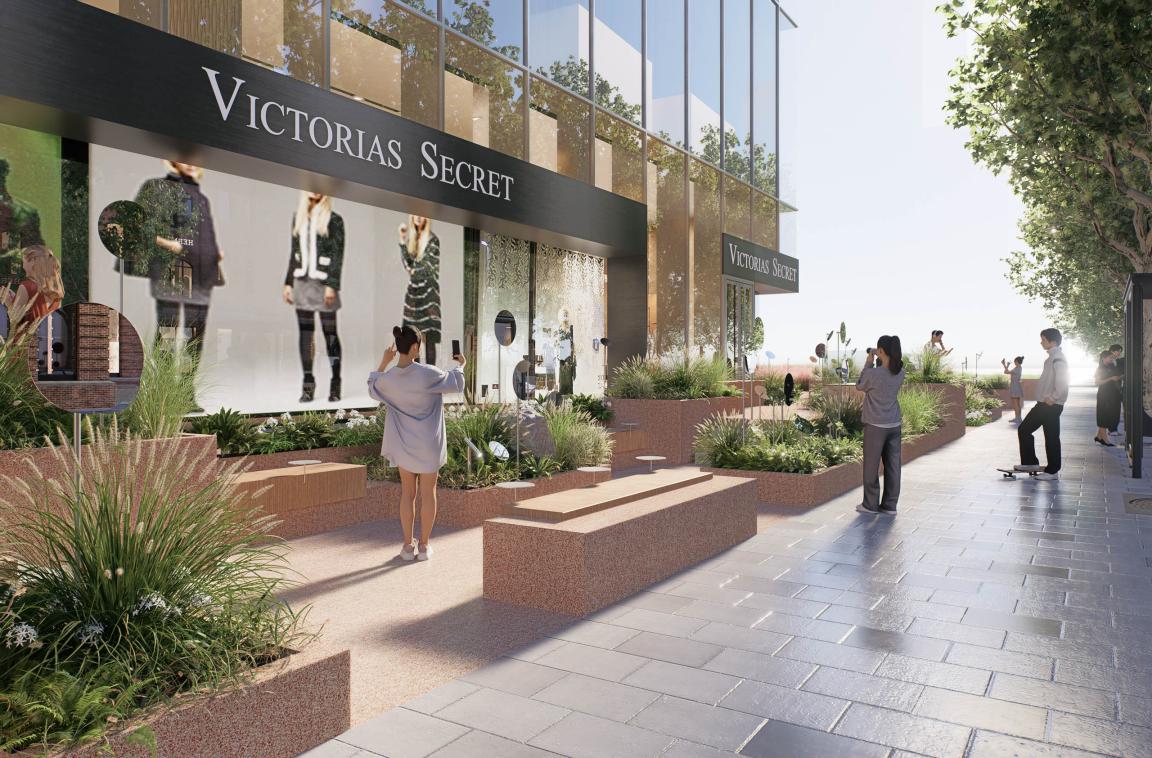
Along Central Huaihai Road, the concept replaced the former green buffer with a series of pocket gardens, offering seating and greenery to invite pause and engagement. These micro spaces aimed to establish a visual and spatial dialogue with the Hermès flagship store, enriching the retail experience and creating a more open and interactive street edge.
Green Promenade on Songshan Road
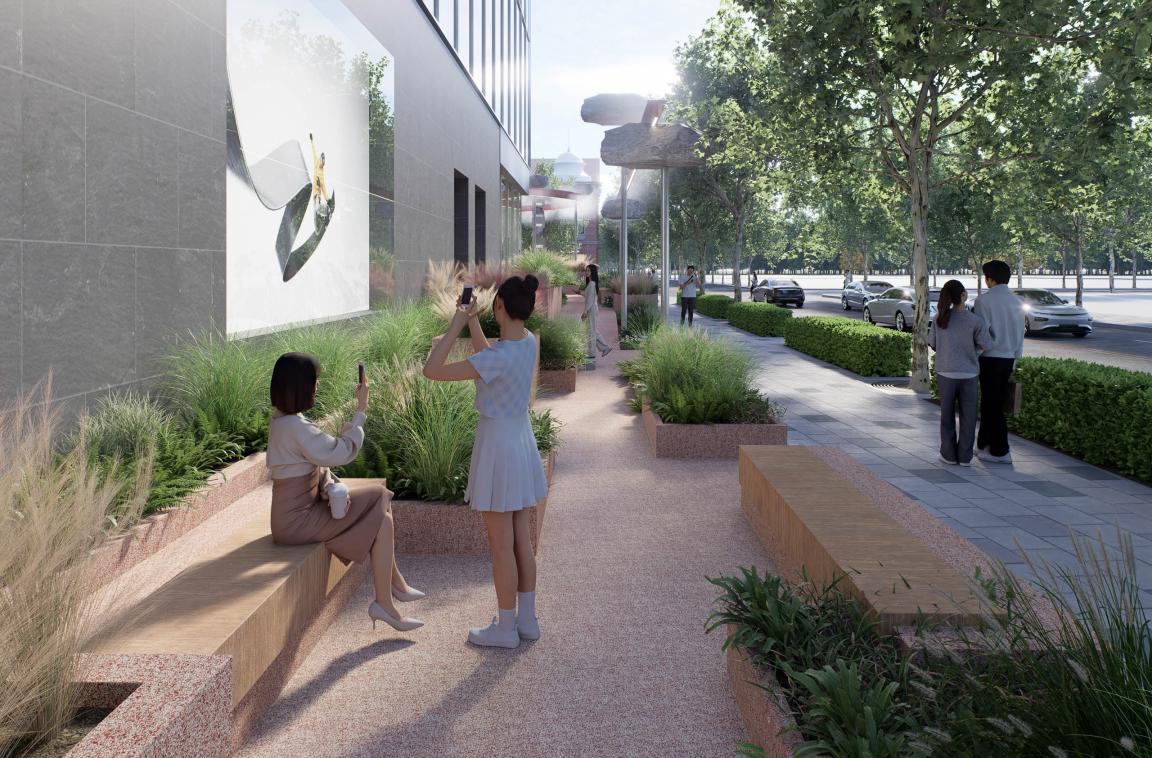
On Songshan Road, the proposal transformed the previously underused back-of-house zone into a linear green promenade, integrating natural planting, wood-finished seating, and pebble wash surfaces. This intervention sought to open up the façade to the city, creating a more comfortable and welcoming streetscape.
Materiality and Atmosphere
The material palette, featuring red metal structures, wood seating finishes, and pebble wash paving, complemented the natural planting and mist elements, adding texture and warmth to the proposed urban environment. Together, these components aimed to create a distinctive public realm merging commercial, cultural, and natural dimensions.