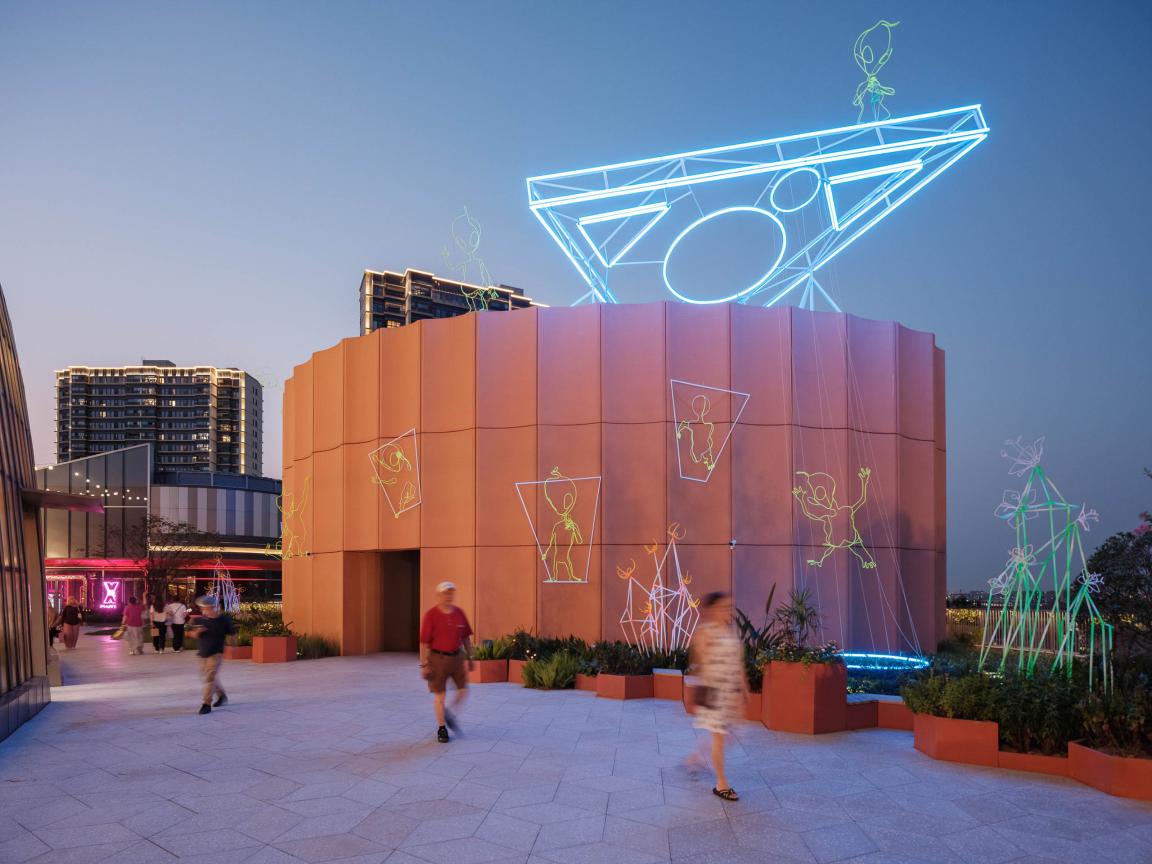
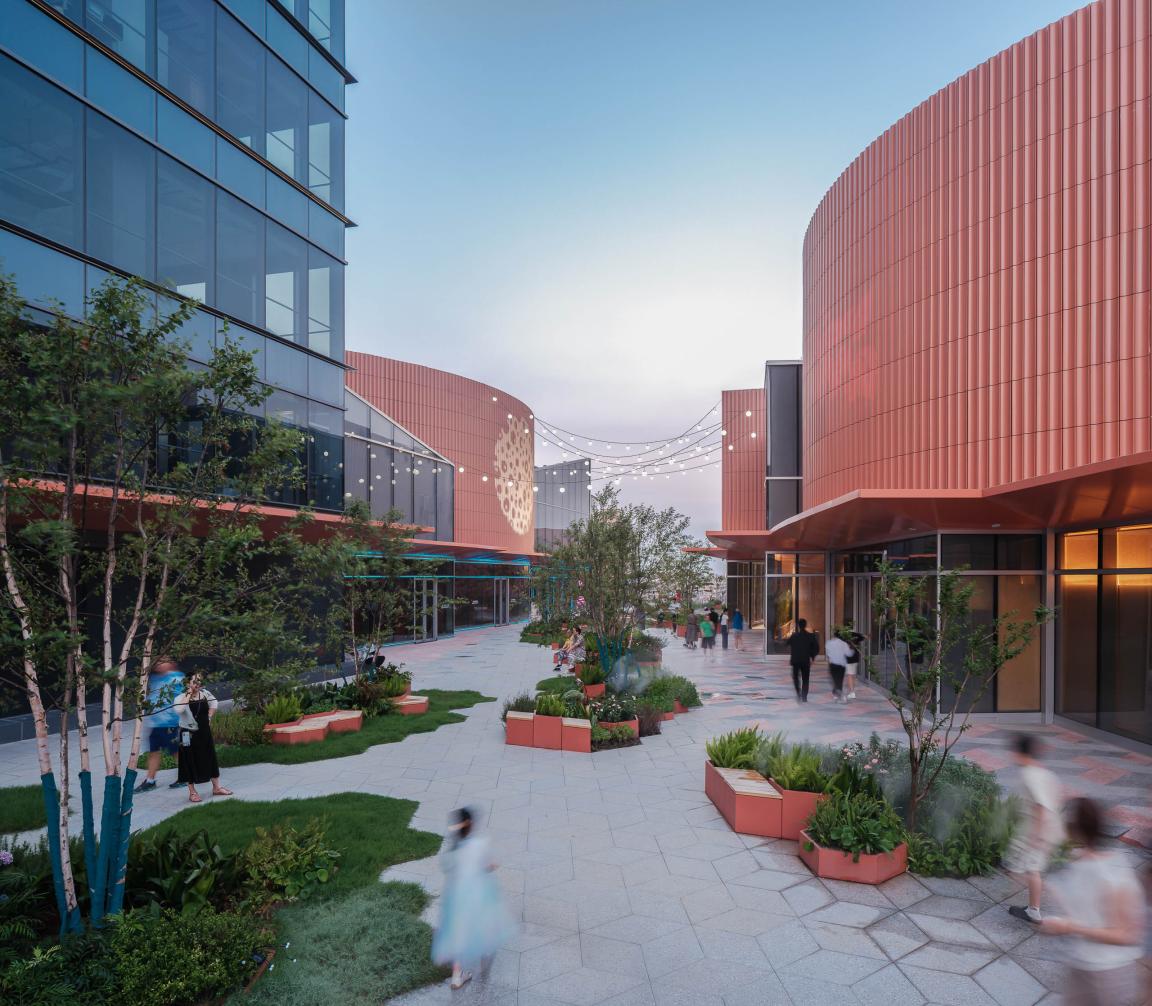
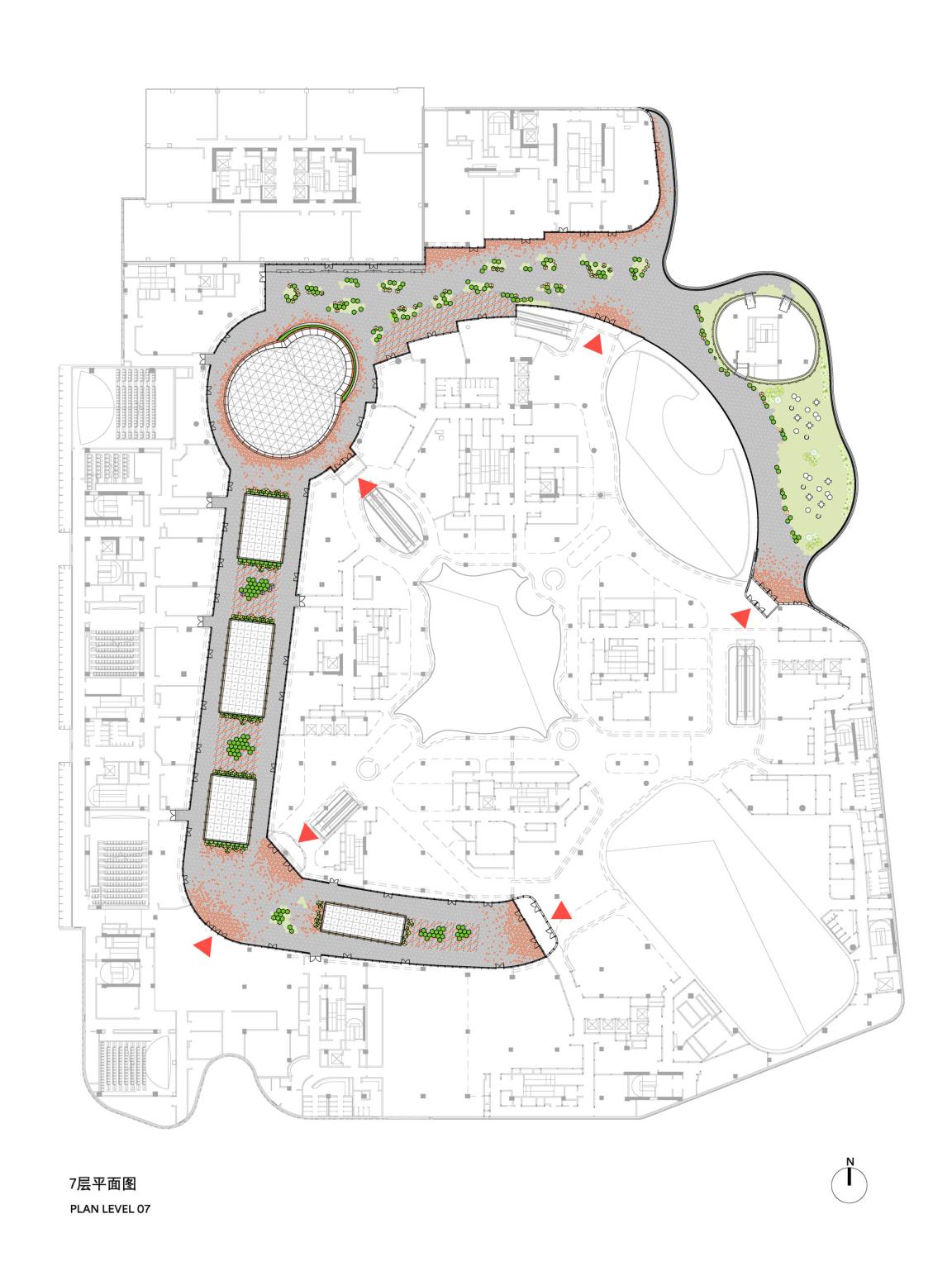
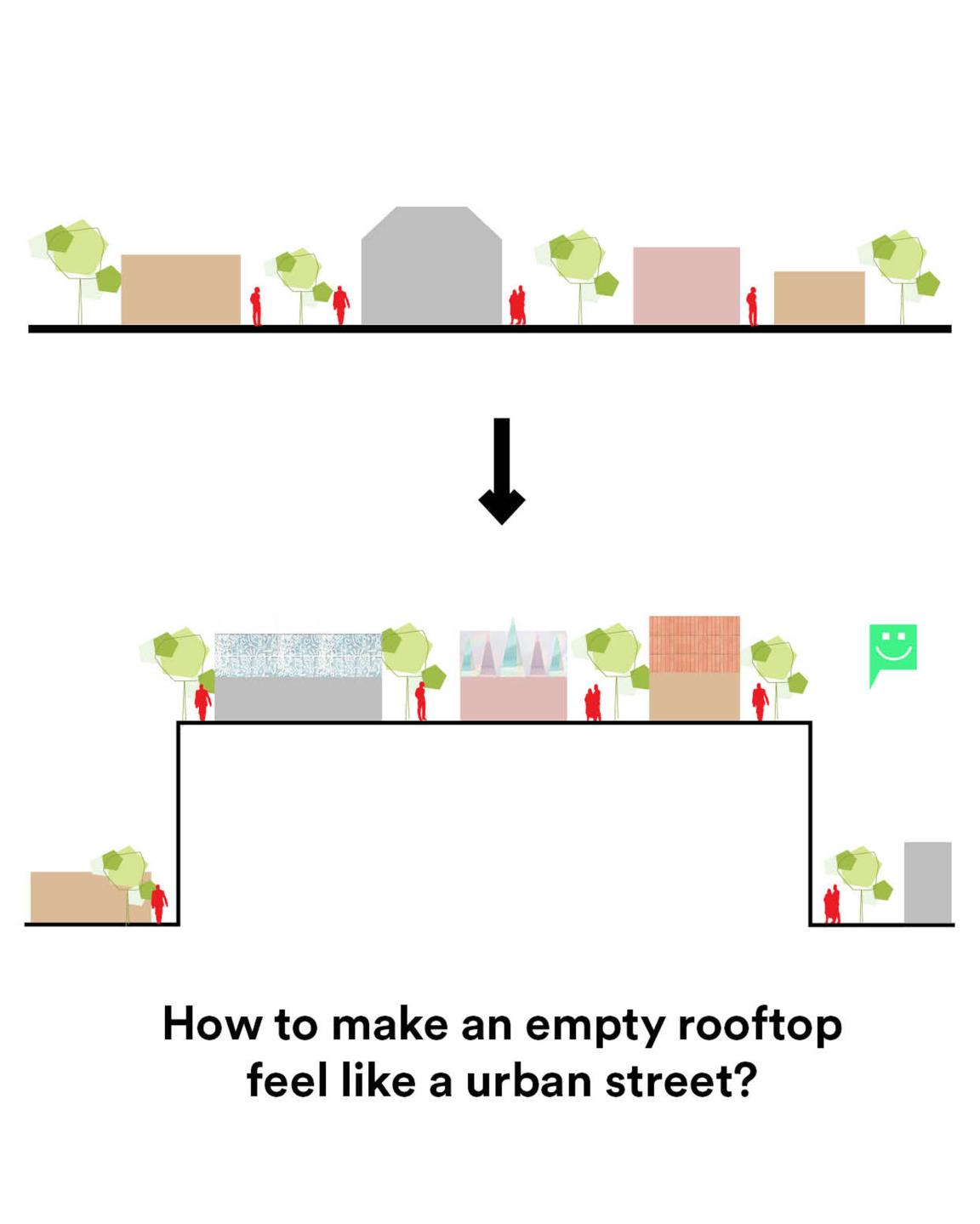
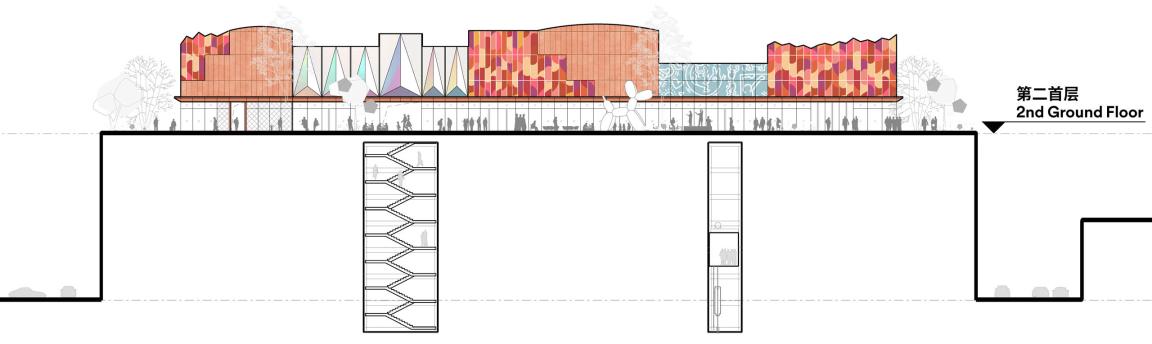
PRISMA Xinjia Center is located at Shanghai’s Jufeng Road district — once a transit-oriented zone during the city’s explosive growth and now a core commercial district that heavily benefits from accessibility. While the 430,000 m2 TOD development, CLOU focused on activating the 4,600 m² commercial rooftop, often disregarded as the “dead space” of the urbanscape. By embracing the open-air nature, CLOU transformed the space into an animated “second ground level.”
A Cozy Prisma Garden
“Prism and Nature” is the guiding concept behind the retail street. CLOU pairs strong geometrical architecture with vibrant social spaces to enhance the commercial value of the rooftop space.
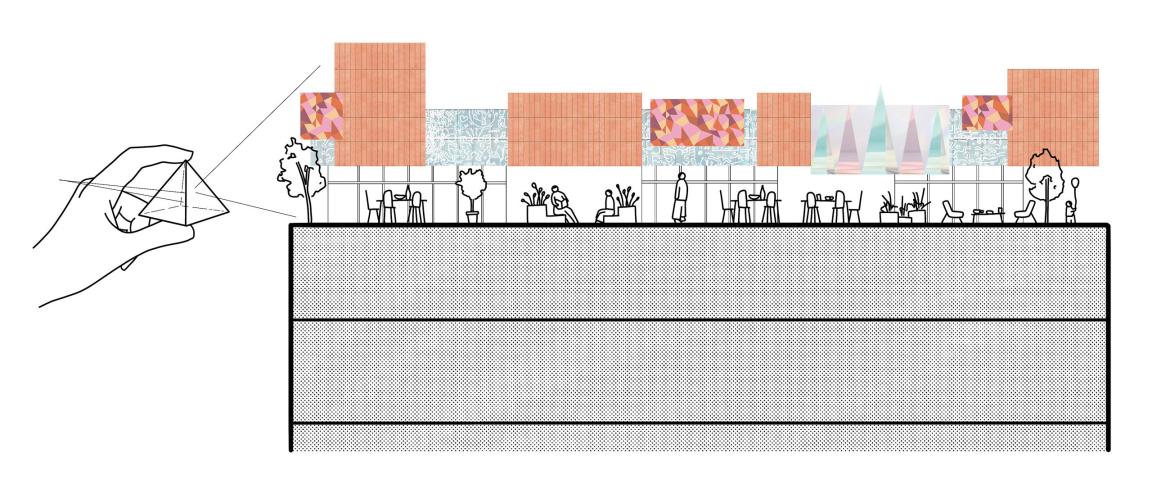
Drawing parallel between the way a prism disperses light into three primary colors with the complexity of social life, the project “refracts” the human experience into three distinct realms: Nature, Society, and Environment. High above, secluded from the noisy urban streetscape, the rooftop surrounds visitors with lush greenery, vibrant human interaction, and rich tactile experiences.
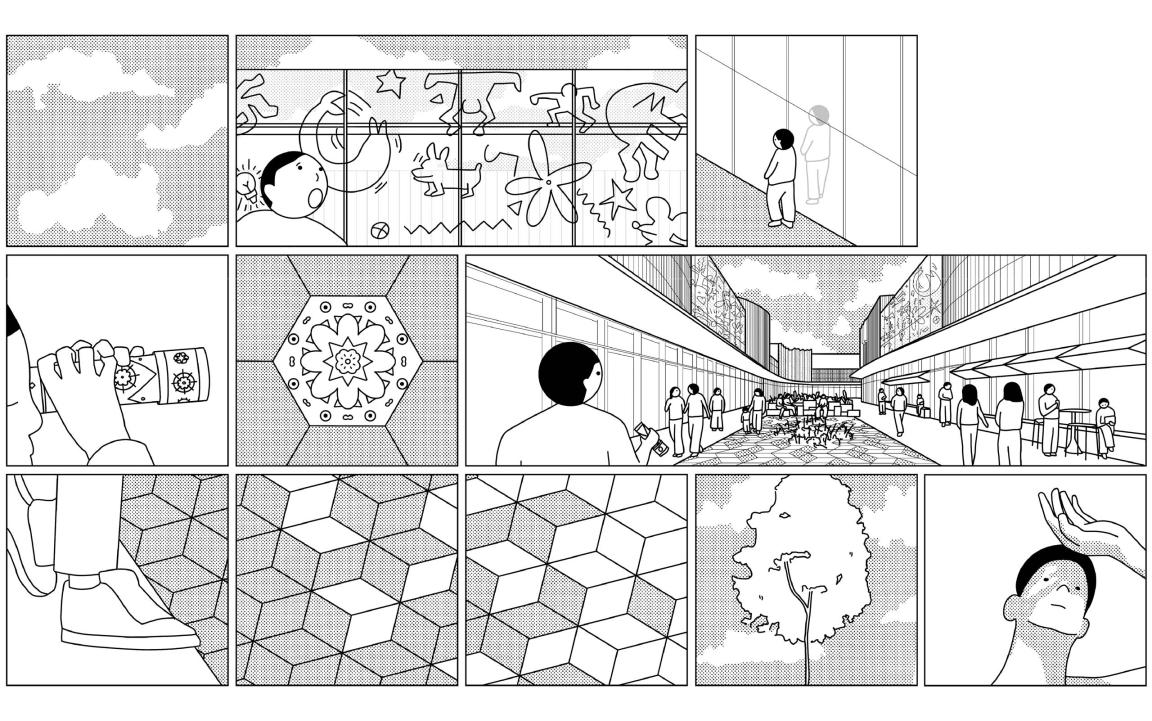
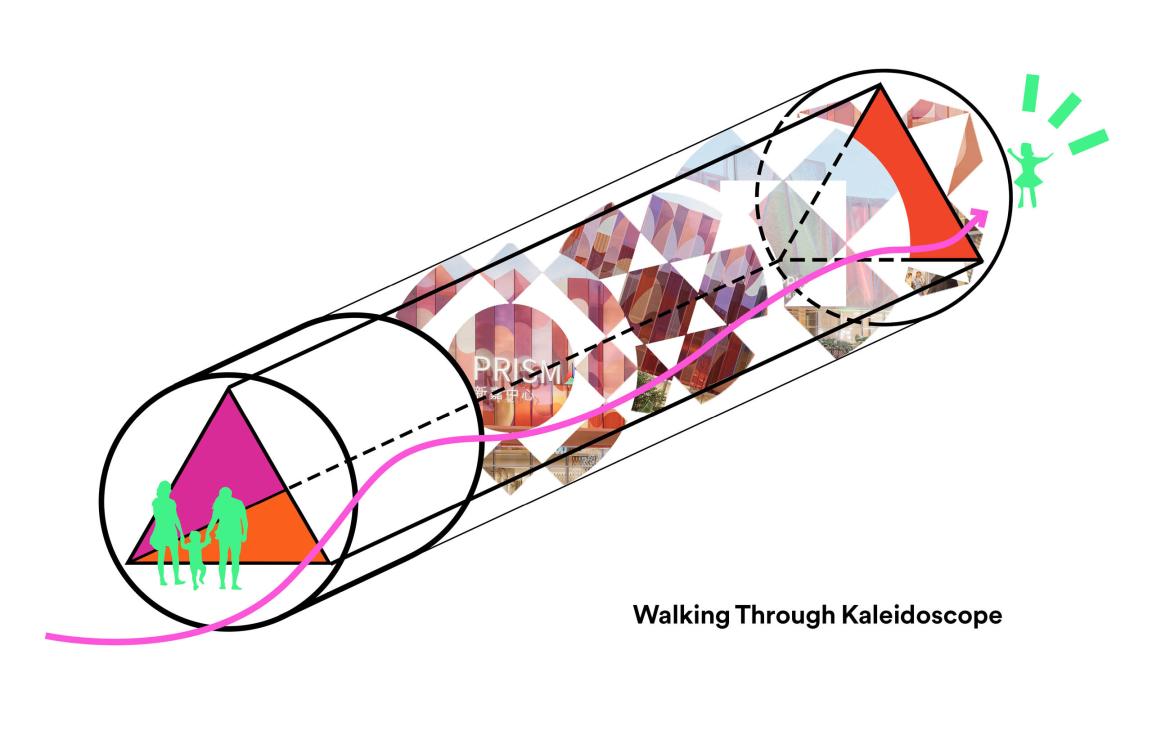
The main goal is to transform the monotonous nature of a linear street into a sequence of engaging moments through dynamic play of third skin. With multifaceted geometries and light-responsive materials, the design evokes a sense of child-like wonder. It invites users to explore the street as if looking through a kaleidoscope – where every movement transports them into a playful realm of shifting colours and patterns.
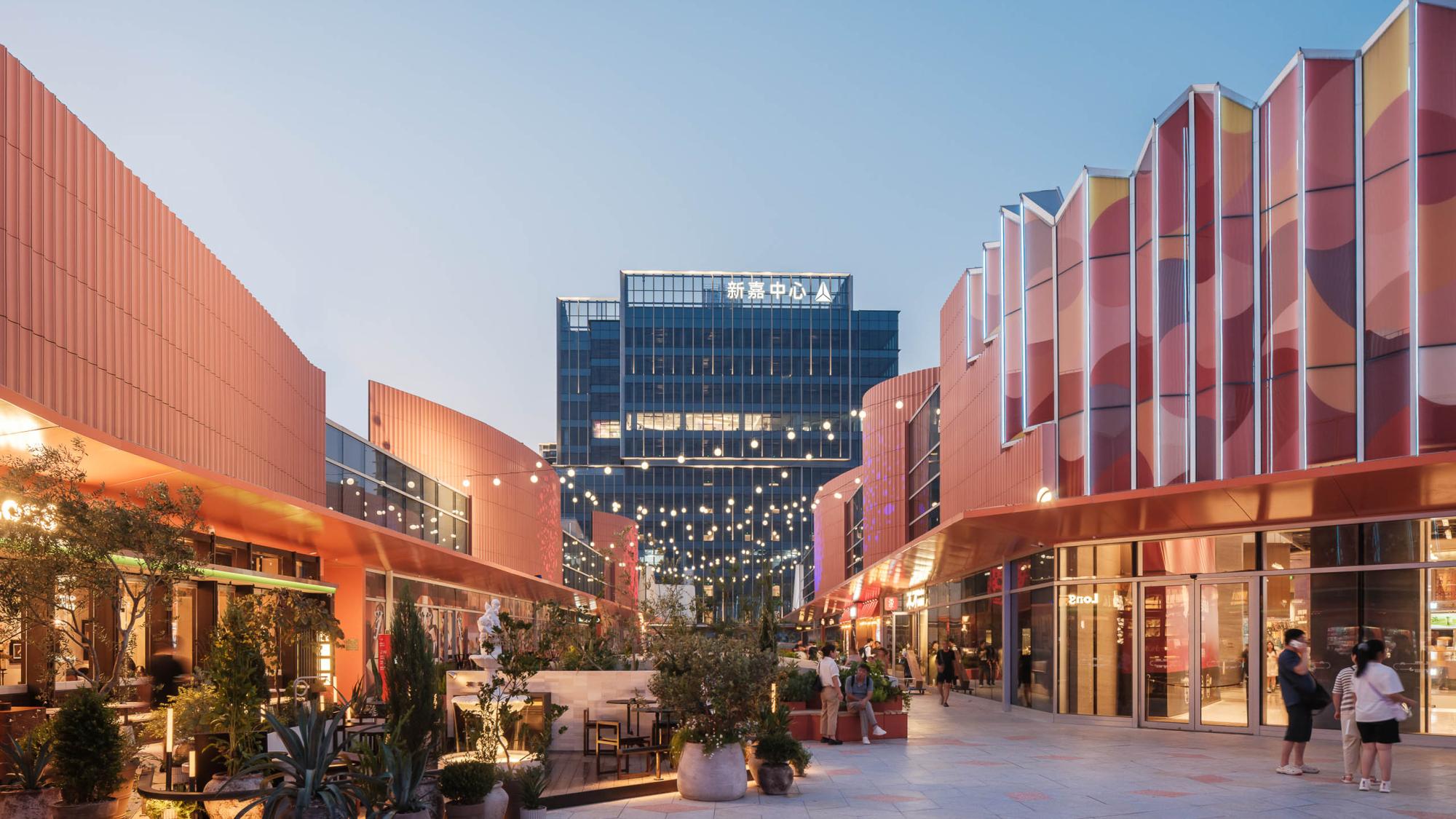
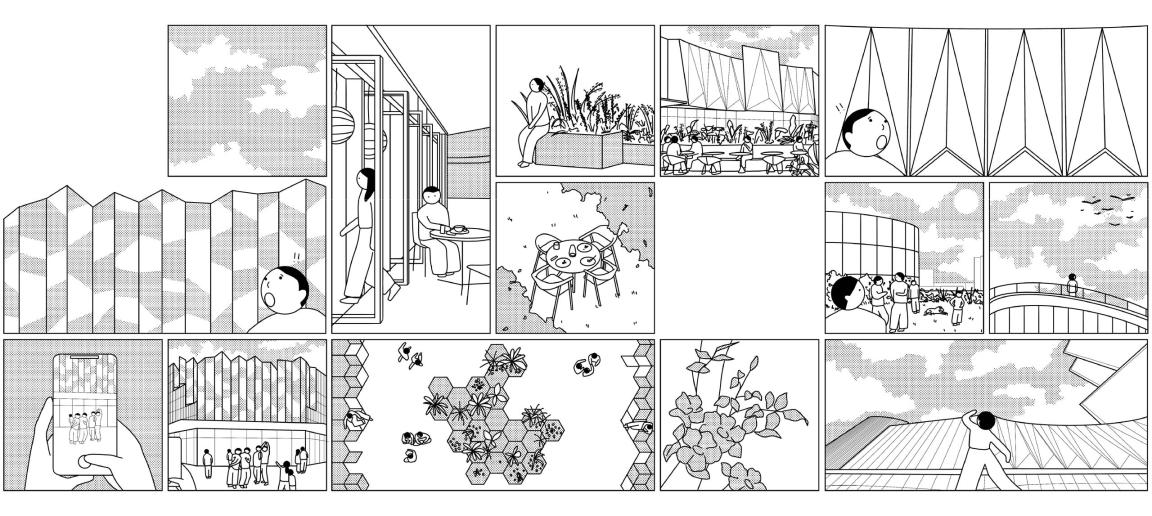
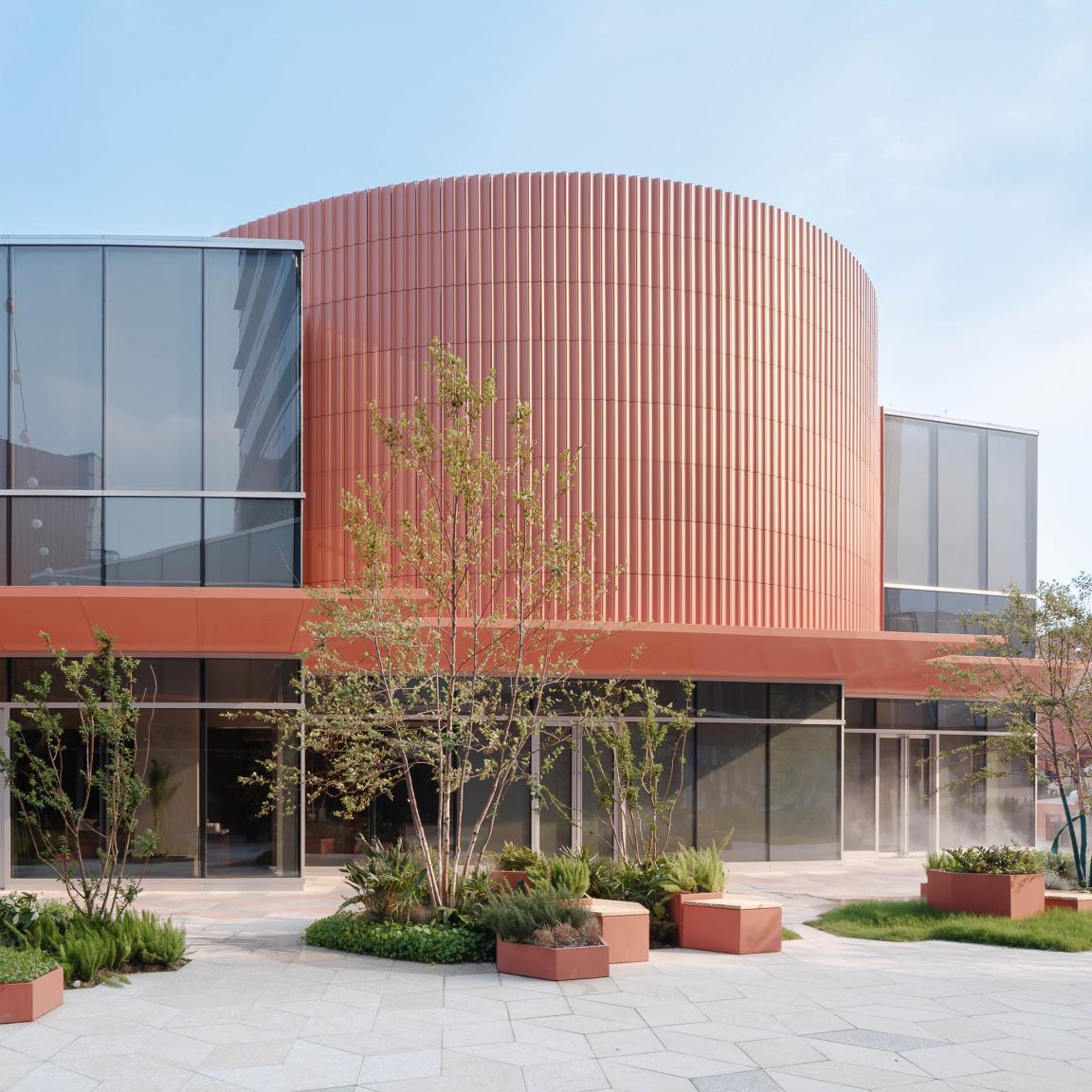
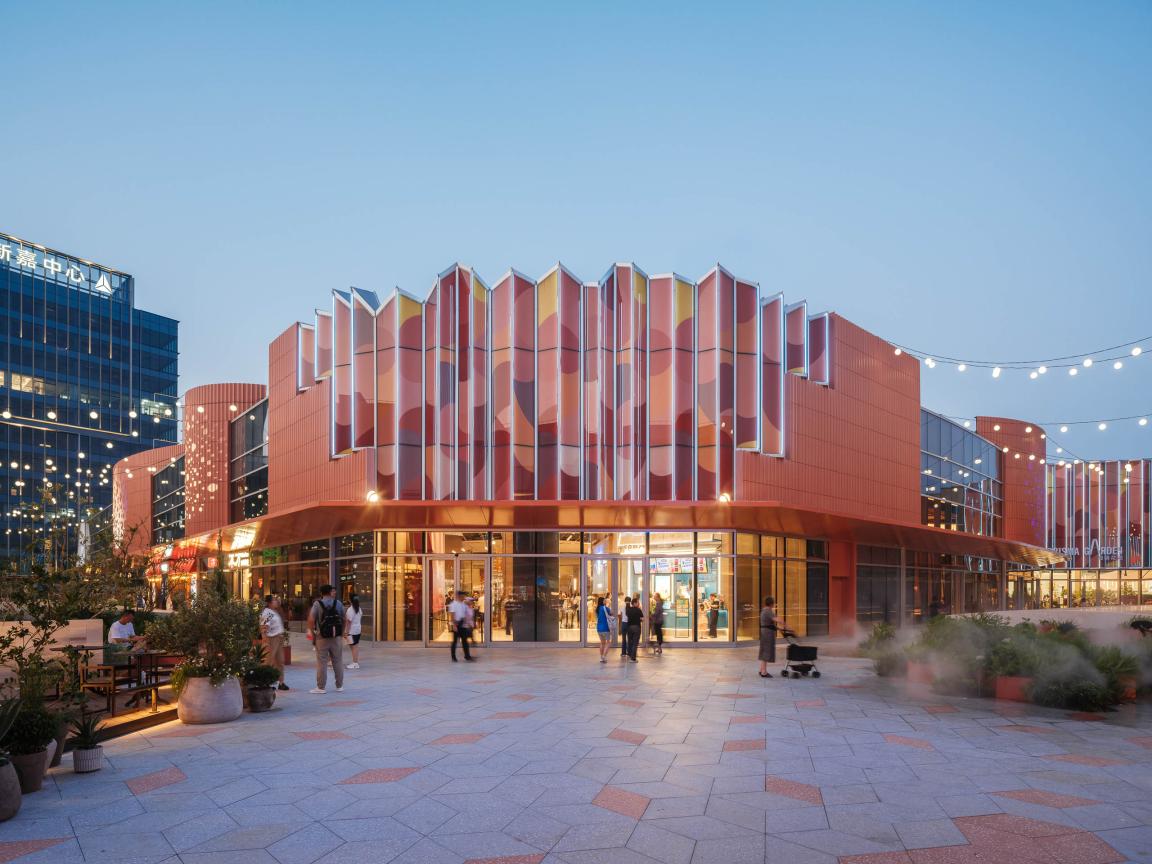
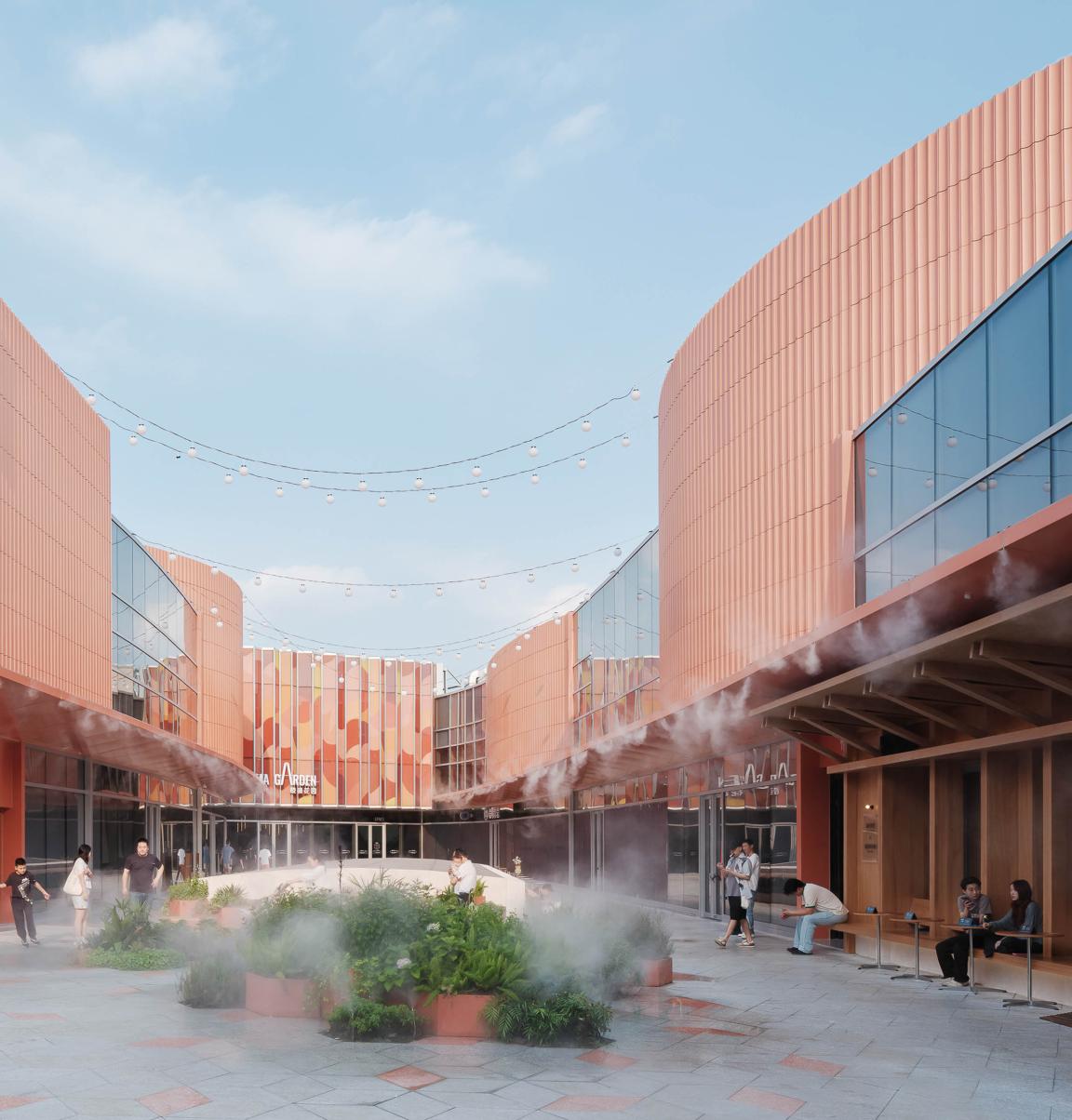
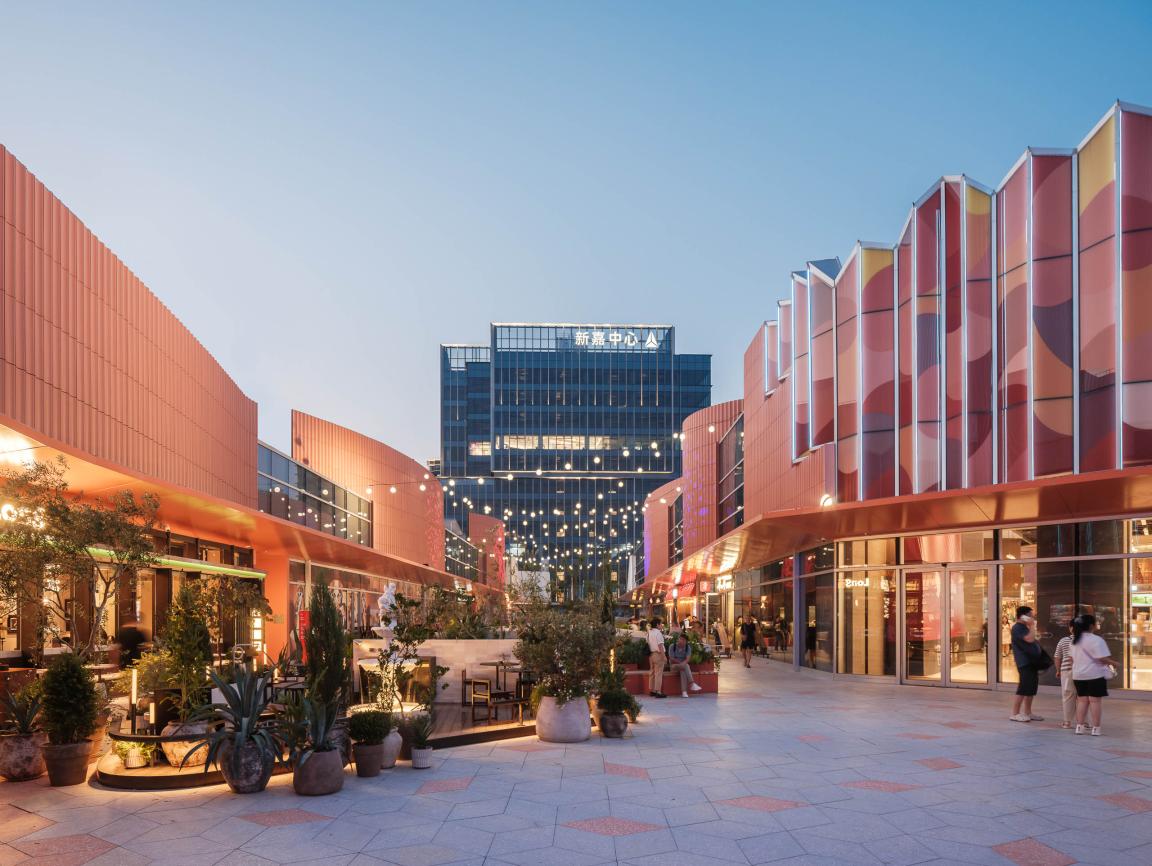
The facades are defined by four distinct variants, each exuding a unique personality. It ranges from systematic curtain walls to bold PES polygonal membrane structures, balanced by the tactile warmth of curvilinear fluted terracotta and prismatic coloured-glass façade.
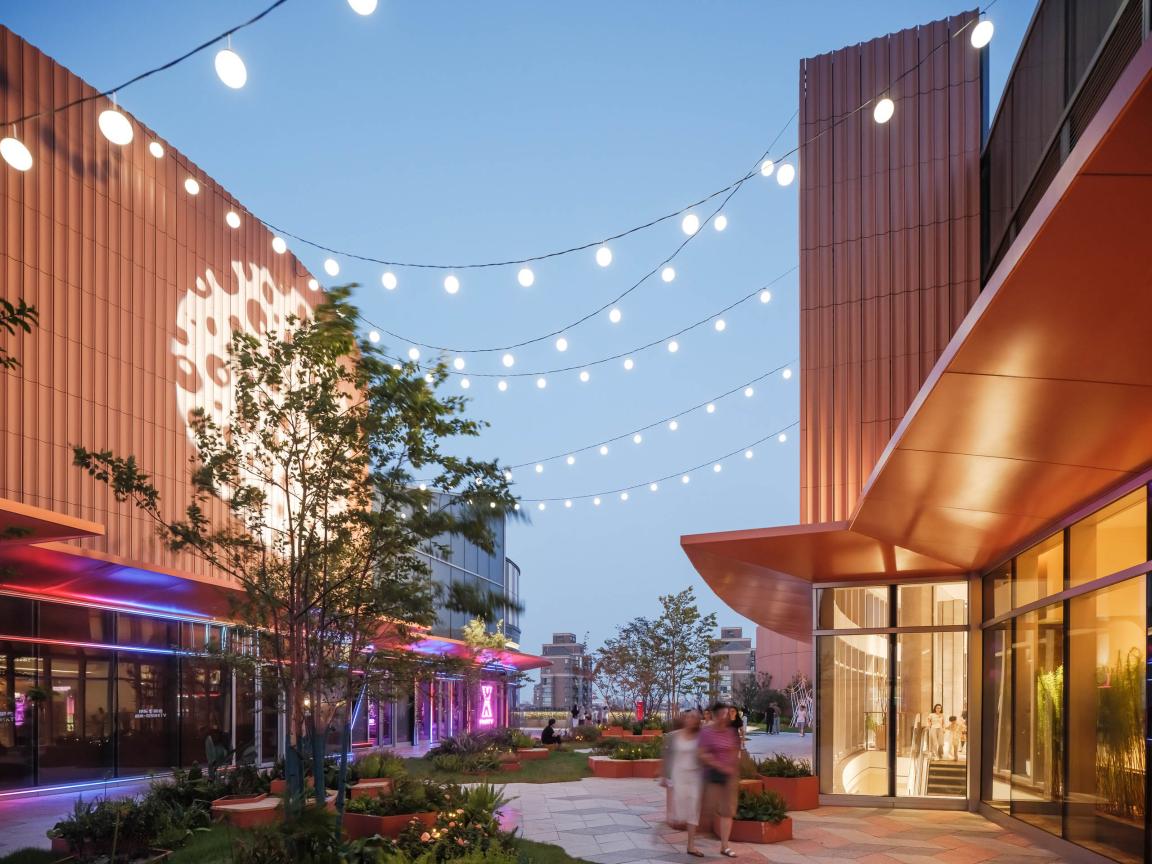
These façades act as canvases for the interplay of lights. During the day, sunlight bounces across reflective surfaces while casting a warm, glow over the fluted terracotta. By night they shift to adapt to the contrasting rhythm of nightlife.
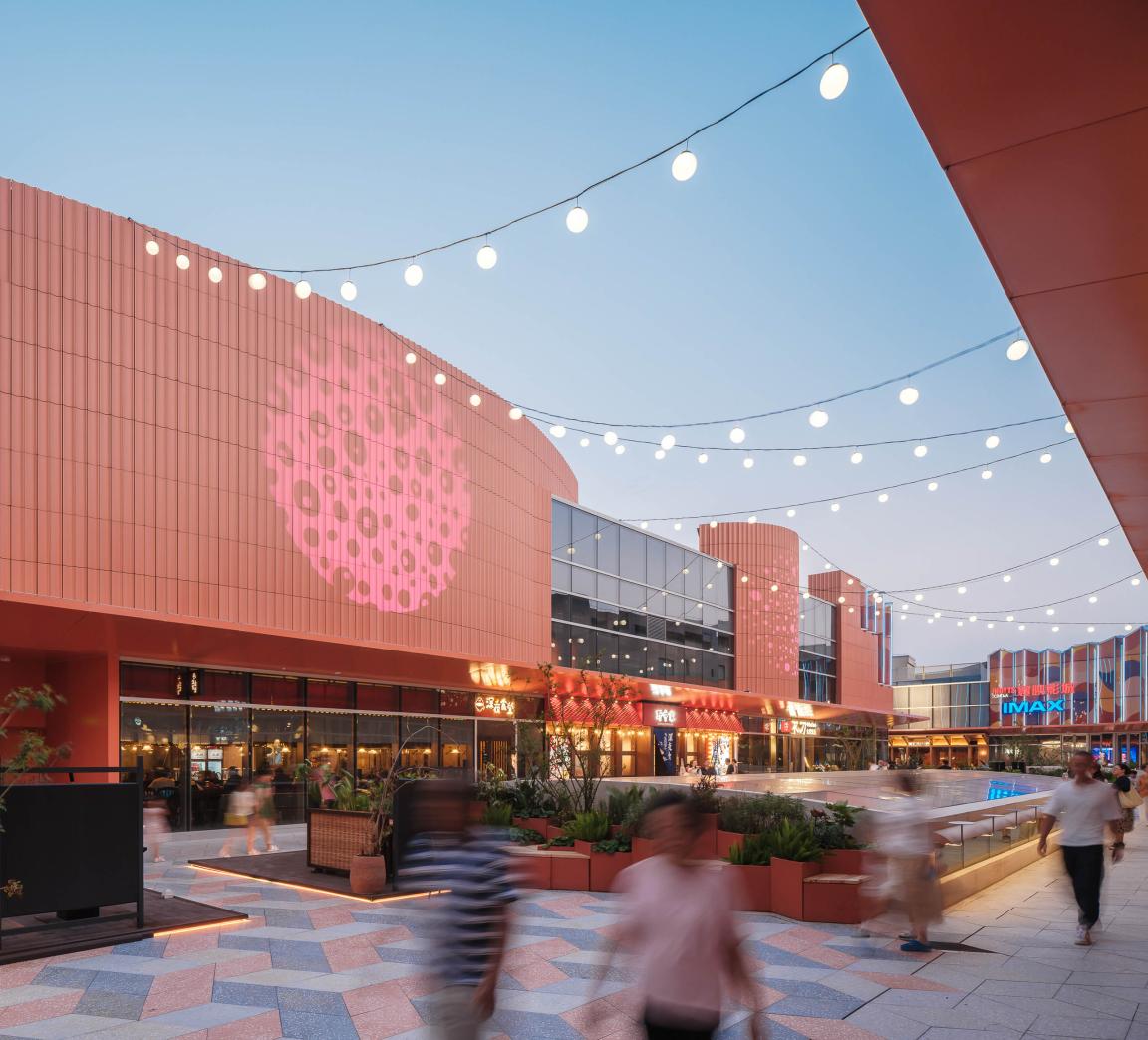
The spaces transition seamlessly, stitched together by curated flooring patterns to choreograph pedestrian movement. Radial patterned floor tiles, for example, signal entrance and high traffic nodes.
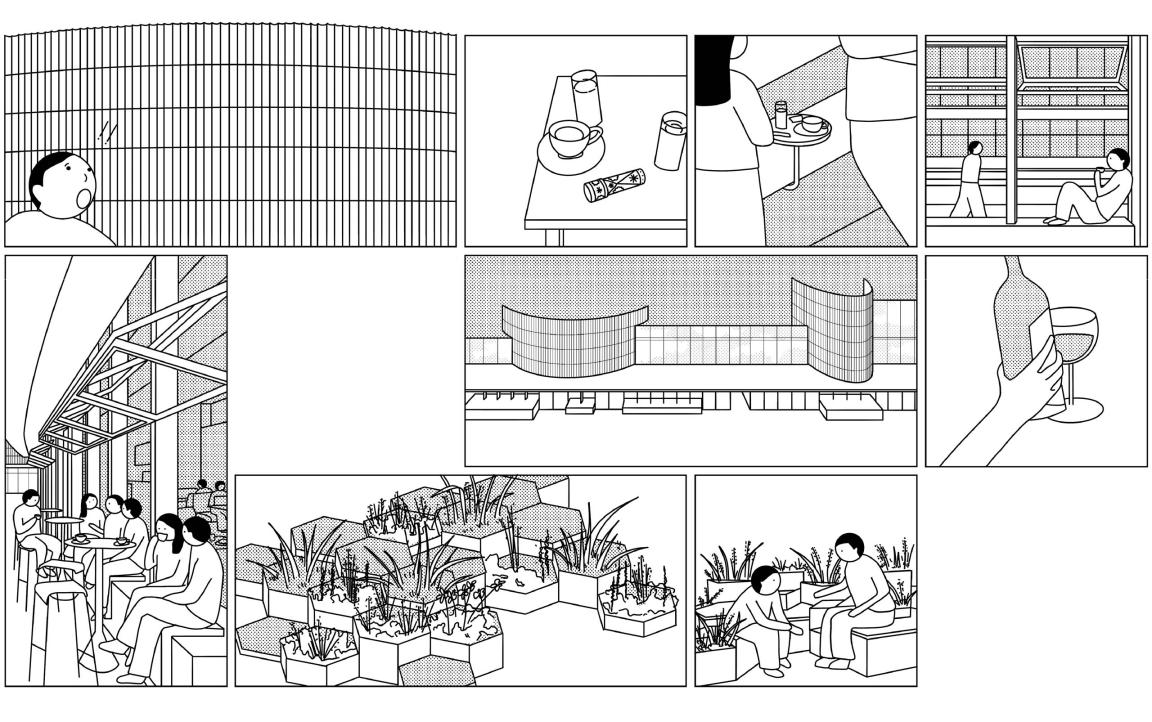
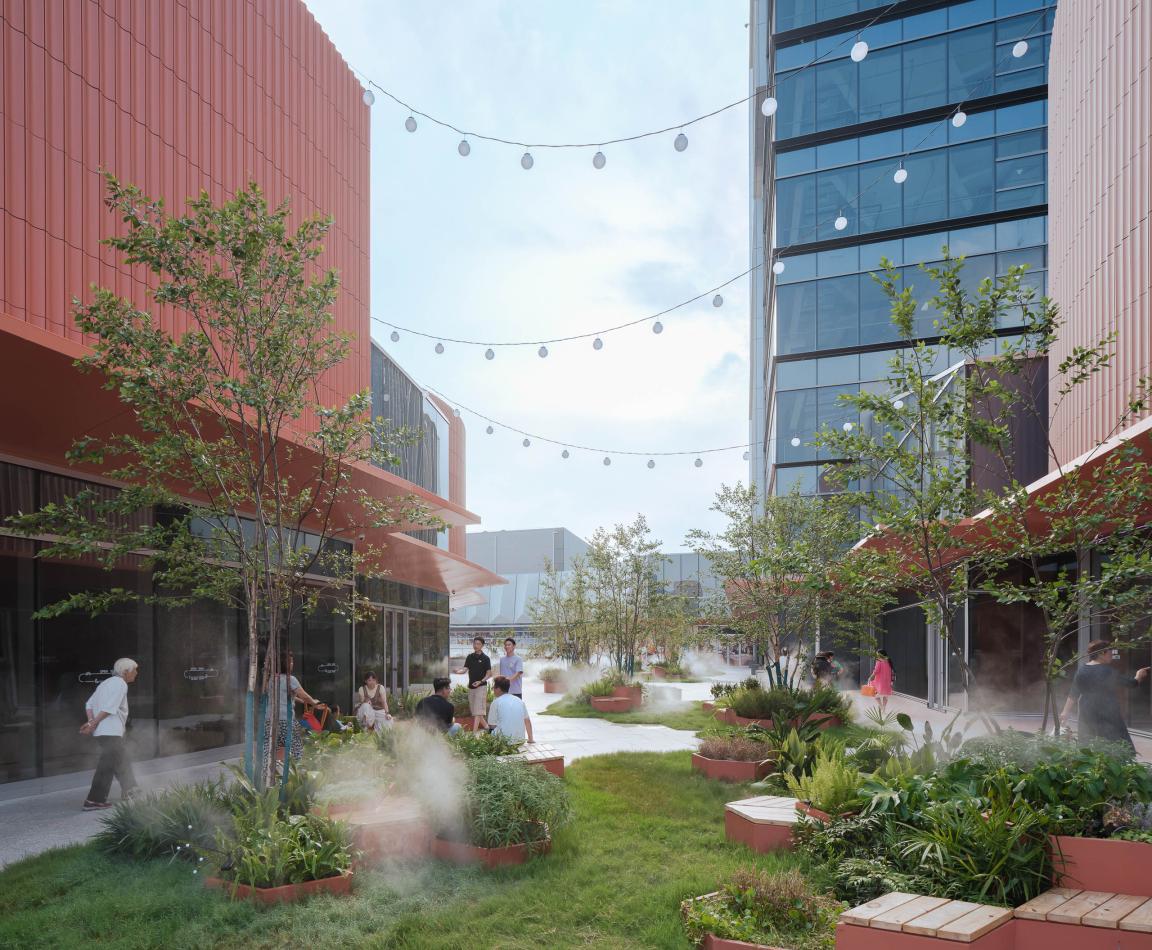
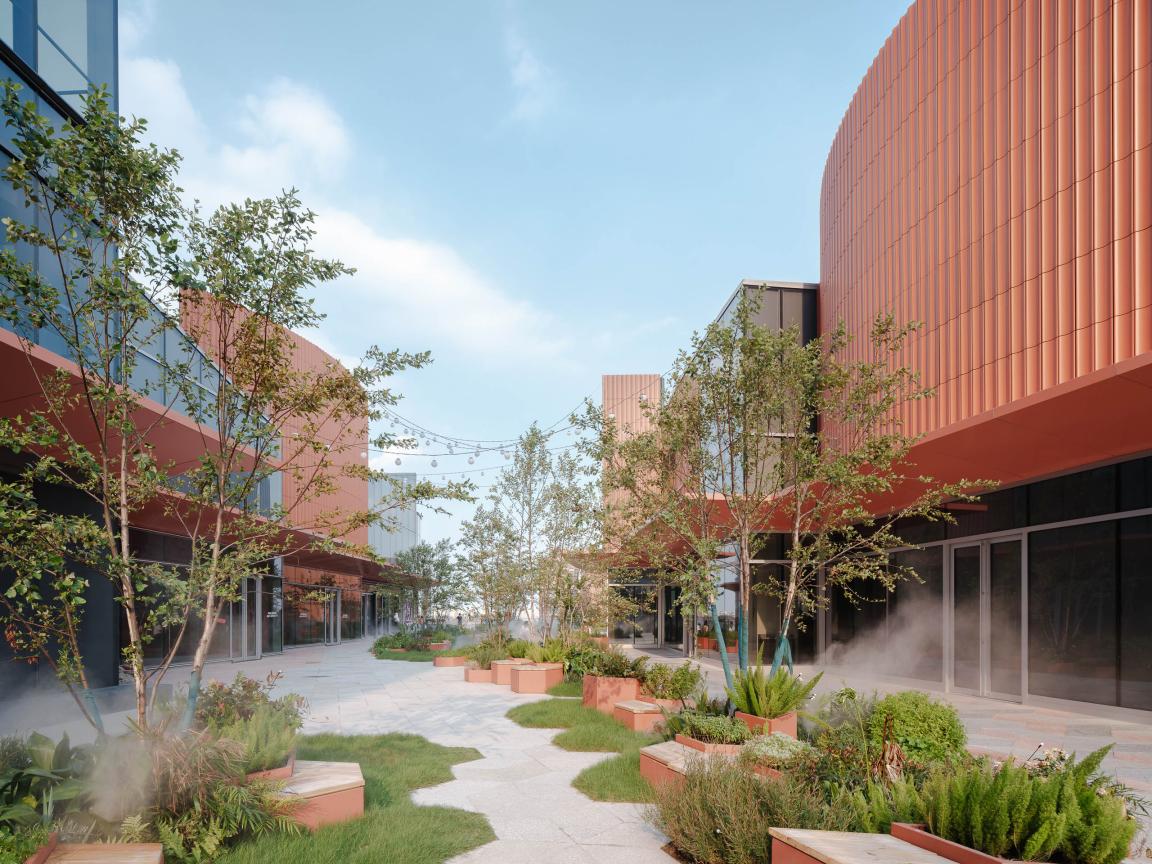
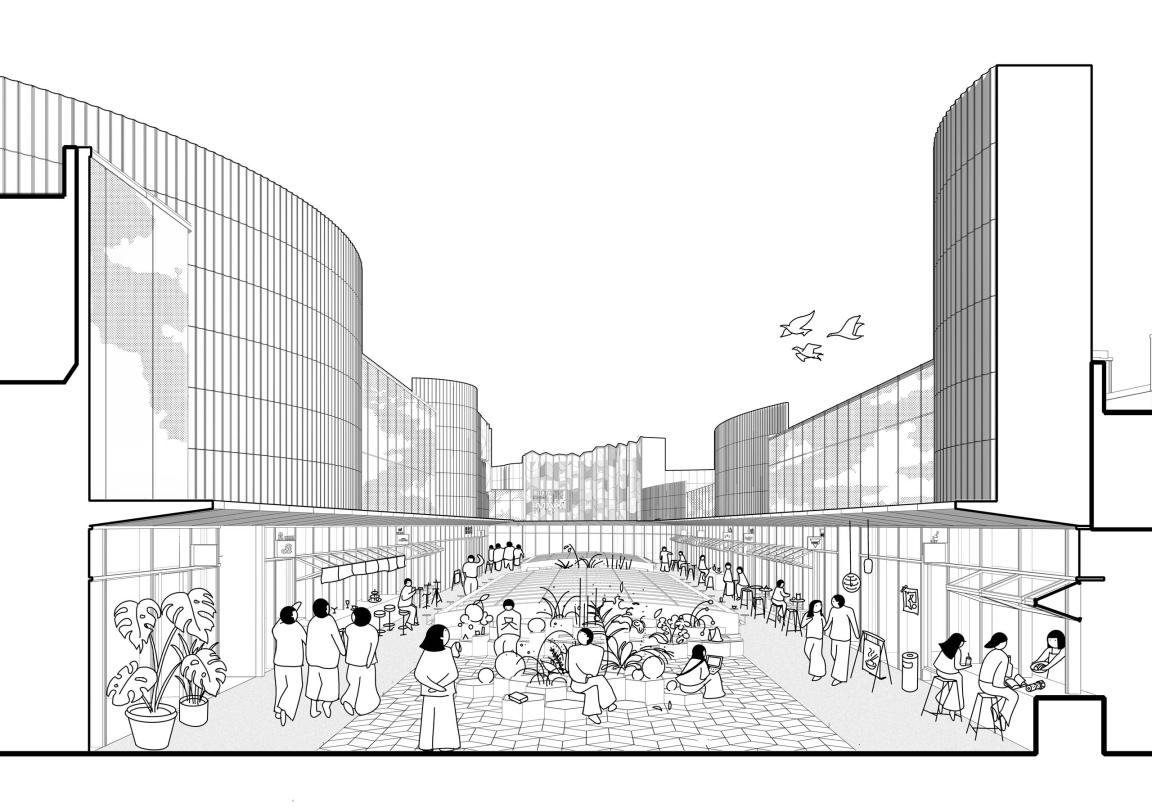
Meanwhile the intricate, carpet-like paving patterns define intimate pockets for lingering. Paired with landscaping and alfresco seating, these spaces serve as an urban outdoor living room for the community to connect.
The planters are three-dimensional extrusions of the prismatic tiles that serve as both planting beds and seating, blending into the ground as if they were an organic formation.
Where Vitality Breathes
By injecting greeneries and promoting cultural activities into the elevated plane, Prisma Garden constructs an immersive living theatre suspended above the city.
By night, the street is illuminated with kaleidoscopic splashes of light, using integrated LEDs and light projections to interact with nocturnal urban life.
The 300-metre-long promenade hosts a diverse array of entertainment programs and dining experiences. Sheltering this entire ecosystem is a continuous perimeter canopy, creating an all-season social threshold designed for year-round engagement.
Sensorial Journey
CLOU views architecture as a byproduct of human interaction – the physical result of how we move, feel, and connect. Just as Olafur Eliasson uses light and colour to turn structures into expressive art, we believe architecture must transcend pure functionality to engage the senses.It serves as a social stage that fosters human engagement, making the sensory experience as vital as the structure. By blending these elements, we create environments where people don’t just occupy a space, but truly interact with their surroundings and each other.
In modern society where our routines often feel repetitive, this playful street serves as a colorful backdrop for a vibrant social life. By treating the architecture as a stage and the light as a performer, the space stops being just a building and starts feeling like a living part of the community, where the people themselves are the main actors.
The Sky Street at PRISMA Xinjia Center is an architectural response to the diminishing of ground-level public space in dense cities. By elevating street life above vehicular traffic, this pedestrian-only oasis reclaims the sky for human connection. In this protected environment, the city’s usual disruptions fade away, allowing for an urban lifestyle where people can truly interact with one another and the architecture.